 AI Resume Screening: A Guide for Recruiters
July 2026 / 9 min read / Written by our editorial team
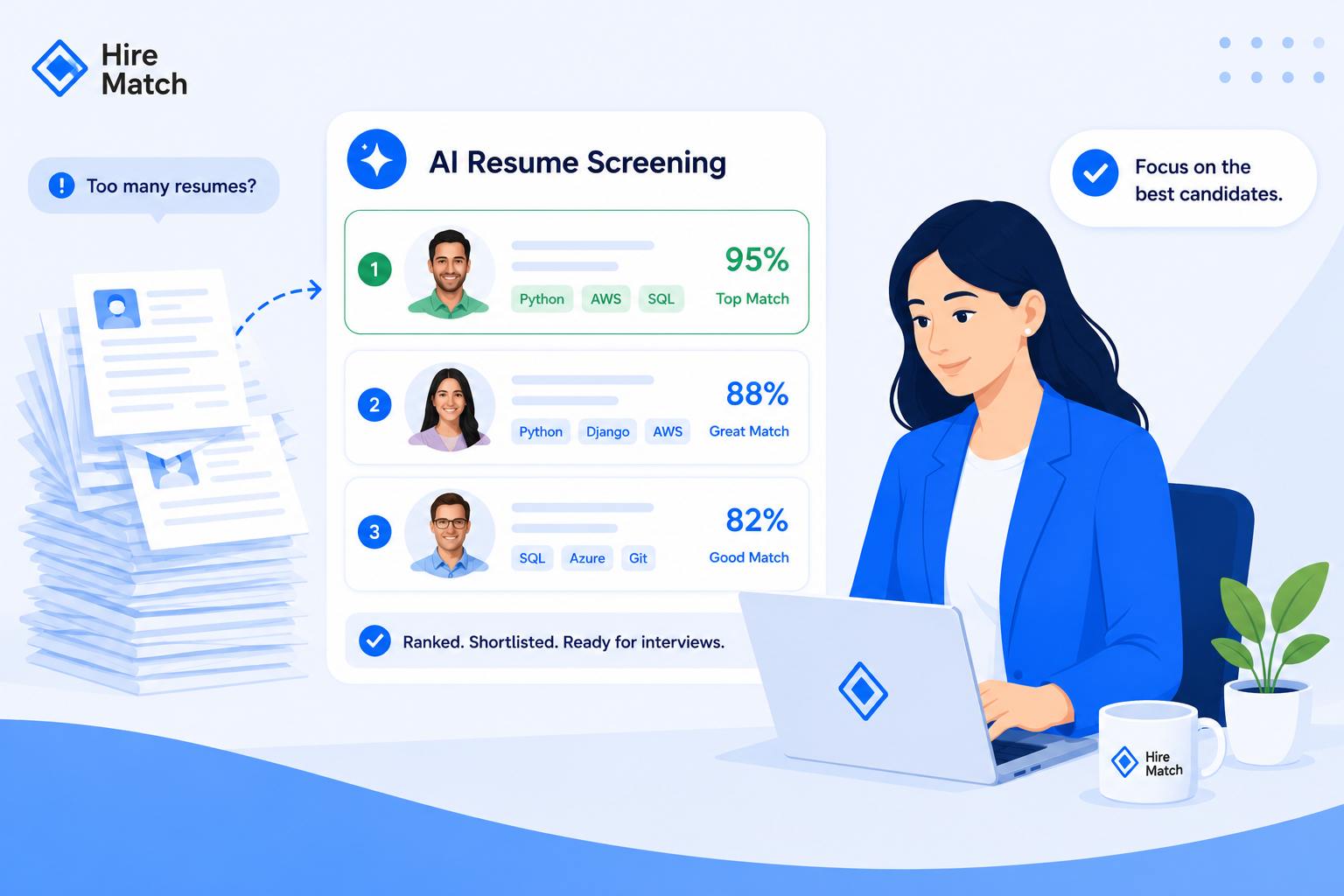
Every open role attracts more applications than ever before. Thanks to AI, candidates can now tailor resumes in seconds, leaving recruiters to sift through hundreds of highly polished CVs to find the few who are genuinely qualified.
AI resume screening helps solve this problem. Instead of manually reviewing every application, it analyzes resumes, ranks candidates by fit, and creates a shortlist of your strongest applicants.
In this guide, you'll learn how AI resume screening works, where it outperforms traditional keyword matching, and how to choose the right solution for your hiring process.
Key take-aways
- Not all AI resume screening tools are created equal. Some still rely heavily on keyword matching, while others evaluate candidates more like a recruiter would—looking at skills, career progression, transferable experience, and overall fit. Choosing the right tool can make a significant difference in hiring quality.
- The right AI helps recruiters hire better, not just faster. By automatically reviewing and ranking candidates, recruiters spend less time screening resumes and more time interviewing the people most likely to succeed.
- AI works best alongside human judgment. It can surface the strongest candidates and support better decisions, but recruiters remain essential for evaluating motivation, interpersonal skills, and long-term potential.
What is AI resume screening
AI resume screening is the use of artificial intelligence to analyze resumes, evaluate candidate suitability, and rank applicants based on their fit for a role. By assessing factors such as skills, work experience, career progression, and transferable experience, AI helps recruiters identify the strongest candidates and create a ranked shortlist for further review.
Why the quality of AI resume screening matters
At first glance, most resume screening tools appear to do the same thing: help recruiters narrow down a large pool of applicants. In reality, the way they evaluate candidates can differ significantly.
Many traditional resume screening tools—including those built into some of the largest applicant tracking systems (ATS)—still rely heavily on keyword matching, looking for specific words and phrases that appear in both the resume and the job description. While this can help filter large volumes of applications, it often overlooks context, transferable skills, and career progression, meaning qualified candidates can be missed simply because they don't use the expected terminology.
The rise of AI-generated resumes has made these limitations even more apparent. Candidates can now tailor their CVs to a job description in seconds, making it easier to satisfy keyword-based screening without necessarily being the best fit for the role.
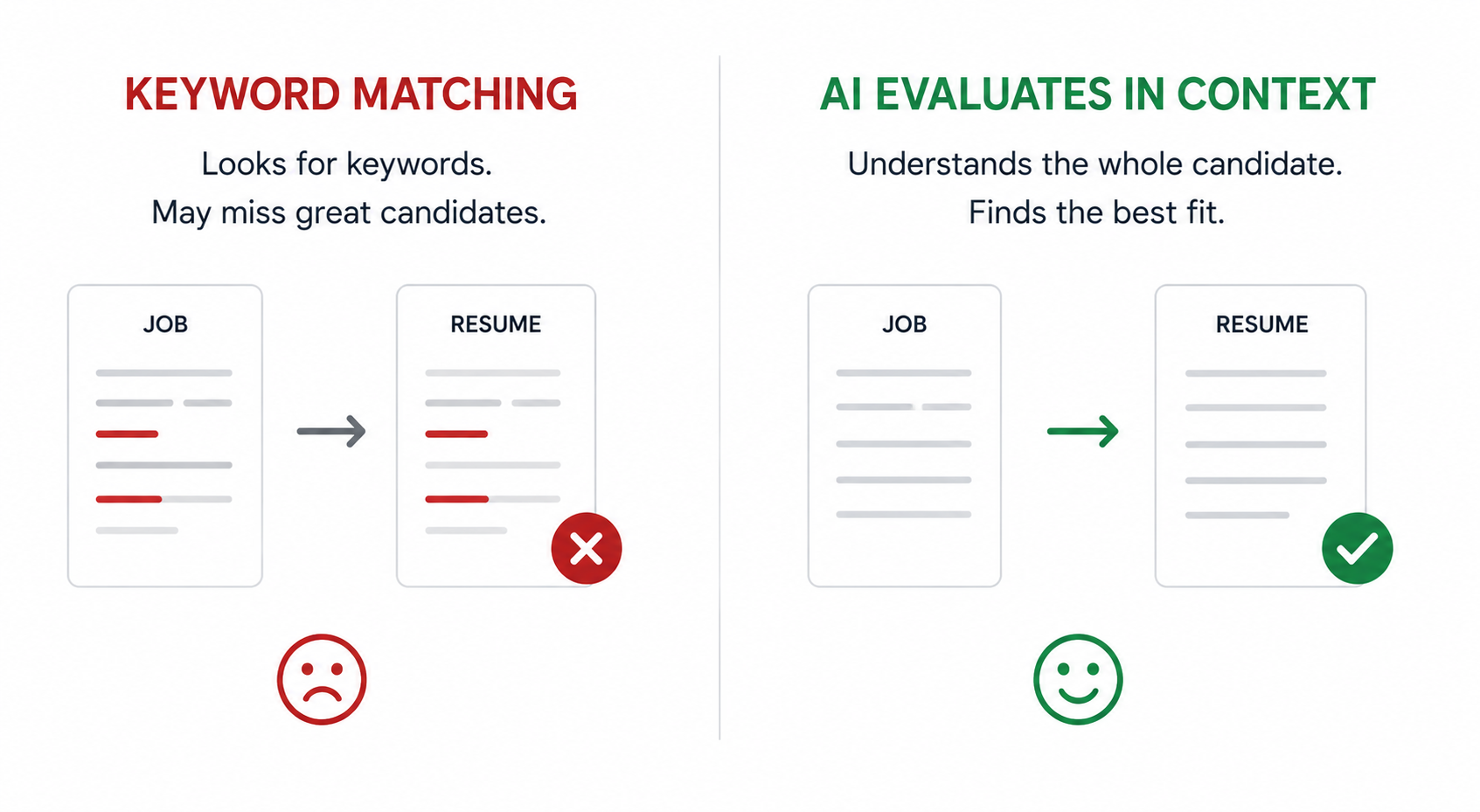
More advanced AI resume screening tools go beyond keyword matching. Rather than relying on exact terms alone, they evaluate candidates in context by considering factors such as skills, work experience, career progression, transferable experience, and overall job fit. The result is a more accurate shortlist based on candidate suitability, not keyword optimization.
The table below highlights the key differences.
| Traditional Keyword Matching | Advanced Resume Screening | |
| How candidates are evaluated | Matches predefined keywords to the job description. | Evaluates overall candidate suitability. |
| Resume analysis | Looks for exact words and phrases. | Understands skills, experience, and context. |
| Transferable skills | Often overlooked. | Identifies related skills and relevant experience. |
| Career progression | Not considered. | Evaluates career growth and progression. |
| Candidate ranking | Filters resumes based on keyword matches. | Ranks candidates by predicted fit. |
| Output | Filtered list of applicants. | Ranked shortlist with fit scores and candidate insights. |
| Best suited for | Basic application filtering. | Identifying the strongest candidates. |
How good AI resume screening works
Most AI resume screening applications follow a similar process to discover the most suitable candidates for a role.
