AI Resume Screening: A Guide for Recruiters
July 2026 / 9 min read / Written by our editorial team
If you're a recruiter, you’ll understand the pressure of being buried under volumes of resumes firsthand, especially with AI tools making it easier for candidates to quickly tailor their resumes.
To tackle this, many organizations have turned to AI resume screening, a software which uses artificial intelligence to screen and rank candidates based on how closely their qualifications match the role requirements.
Understanding how to use AI for resume screening effectively and knowing which AI resume screening tools are best is critical in modern-day hiring.
AI resume screening at a glance
- Saves significant screening time.
- Identifies and ranks the strongest candidates for a role.
- Goes beyond keyword matching to evaluate candidates in context.
- Analyzes deep career history and progression.
- Improves screening consistency and hiring efficiency.
- Helps recruiters make more informed hiring decisions.
What is AI resume screening?
AI resume screening uses artificial intelligence to analyze job applications, evaluate relevant factors such as employment history, and create a shortlist of the strongest candidates. Unlike traditional applicant tracking systems (ATS), which over-rely on keyword matching and exact terms, good AI resume screening software reads resumes like a human recruiter (but much more quickly and effectively) to understand how well the applicant’s experience matches the job role.
These advanced tools extract key information from a resume, interpret skills and employment history, and assess how well the candidate's background aligns with the position requirements. AI for resume screening isn’t designed to replace human judgment, but to assist with the often impossible task of evaluating hundreds of resumes.
What is the difference between AI resume screening and a traditional ATS?
While both tools help recruiters manage larger volumes of applications, AI resume screening is much more advanced than a traditional ATS, as it goes far beyond simple keyword matching. The software evaluates candidates in context and provides deeper insights into their suitability for a role.
The table below highlights the key differences.
How does AI resume screening work?
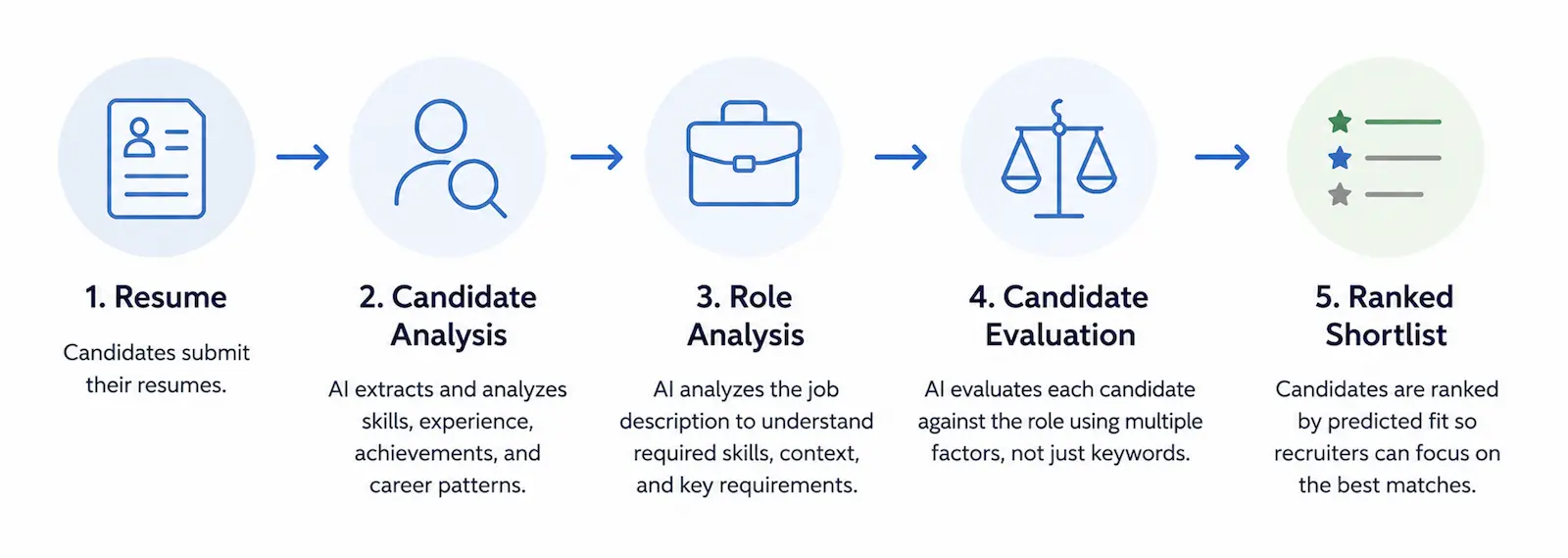
Most AI resume screening solutions follow a similar process to discover the most suitable candidates for a role.
1. Resume parsing
Resume parsing extracts key information, such as employment history, education, skills, certifications, and achievements, from each resume. This creates structured data that the system or employer can easily analyze and compare with other applicants.
2. Job analysis
Next, the AI for resume screening tool analyzes the job description. Instead of matching buzzwords, it takes a more enriched look at the role, identifying the required skills, preferred qualifications, and industry context to pinpoint an ideal candidate.
3. Candidate ranking
The tool then compares each candidate against this role profile. Applicants are scored on multiple factors, including the depth of their skills, career trajectory, industry expertise, and the recency of their relevant experience.
4. Ranked shortlists
Based on the information gathered, the tool creates a ranked shortlist of the strongest prospects by predicted fit, helping hiring managers focus on the most relevant applicants first.
How effective is AI resume screening?
AI screening resume tools help hiring managers review large volumes of job applications faster and more consistently. A survey of Global’s 2025 Hiring Report found that 98% of hiring managers reported improved hiring efficiency due to AI. Unlike manual screening, AI is not affected by fatigue, workload, or time pressure, meaning candidates are evaluated using the same criteria, and the most qualified candidates aren’t overlooked due to time constraints or unconscious bias.
Rather than simply filtering resumes based on keywords, good AI resume screening tools identify patterns and qualifications that indicate strong job fit, helping recruiters discover high-potential candidates who might otherwise be overlooked.
Another advantage is speed. AI can analyze thousands of resumes in minutes, significantly reducing the time spent on manual screening. Forbes reported that recruiters spend at least one-third of their workweek sourcing and screening candidates for a role, and the rise in AI-generated resumes is only adding to this problem.
By reducing time-consuming administrative tasks like filtering through job applications, hiring managers can spend more quality time interviewing candidates, building relationships, and making better hiring decisions. On the flip side, it can also improve the candidate experience by shortening hiring timelines and delivering faster responses.
Benefits of AI resume screening
- Faster candidate shortlisting
- Unbiased candidate evaluation
- Reduced screening workload for recruiters
- Improved candidate experience through faster decisions
- Better scalability for high-volume hiring
- Increased focus on high-potential candidates
- Lower recruitment costs through automation
An example: AI resume screening with Hire-Match
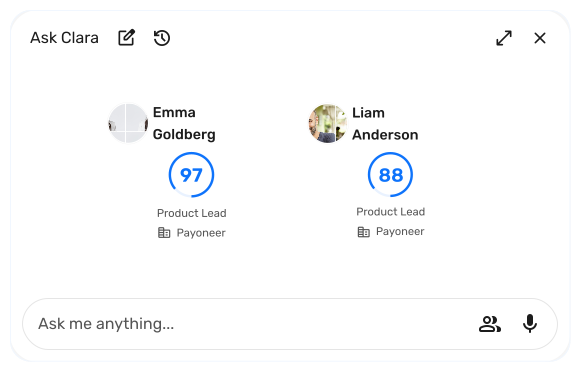
Hire-Match’s AI recruiting assistant, Clara, is designed to identify hiring signals that offer much more than traditional keyword matching. Instead of scanning resumes for specific terms, Clara analyzes factors associated with job performance and long-term success.
These include:
- Career progression patterns, including setbacks and recovery
- Scope of responsibilities and ownership
- Evidence of problem-solving and decision-making
- Relevance of experience across industries and environments
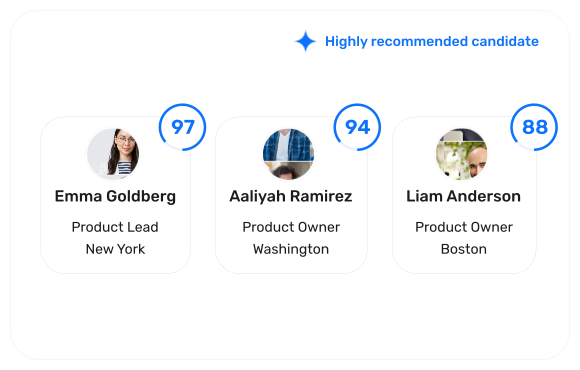
Clara then creates a structured evaluation of each candidate and ranks applicants based on how well they fit the role. Every recommendation is backed by clear scoring criteria, allowing recruiters to understand why candidates have been ranked in a particular order.

But Clara doesn't stop there. Recruiters can interact directly with the AI to explore each recommendation, compare candidates, ask why one applicant was ranked above another, or dig deeper into specific strengths and potential concerns.
Rather than acting as a black box, Clara makes every recommendation transparent and easy to investigate.
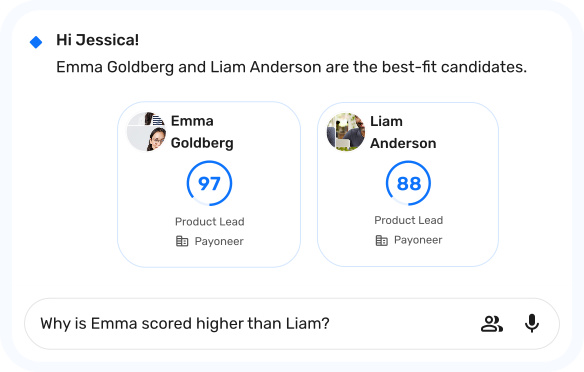
Unlike traditional keyword-based screening tools that simply filter and provide black-and-white pass-or-fail recommendations, Hire-Match's resume screening software gives recruiters deep hiring insights that not only speed up the process, but actually lead to better hiring decisions.
Are there any drawbacks to AI resume screening?
While AI resume screening can improve efficiency and hiring quality, it should not replace human judgment. Some screening tools still rely heavily on keyword matching, job titles, or rigid criteria, overlooking factors such as career progression and transferable skills. More advanced AI tools, like Hire-Match, reduce this risk by evaluating candidates in context, much like an experienced recruiter would.
AI also cannot assess qualities such as motivation, cultural fit, or interpersonal skills from a resume alone. These factors often play a significant role in long-term hiring success. That's why some platforms combine AI resume screening with AI interview software and candidate assessment software to build a more complete picture of each applicant. Recruiters should also avoid relying too heavily on automated shortlists. Building relationships, understanding career goals, and recognizing potential beyond a resume remain uniquely human strengths.
Some candidates may also be skeptical of organizations using AI in hiring. A 2026 study by King’s College London found that 69% of workers were concerned about the economic impact of AI-related job losses. The best approach is to use AI as a decision-support tool rather than a decision-maker. By combining the speed and consistency of AI with the judgment, intuition, and relationship-building skills of recruiters, organizations can make better hiring decisions while creating a more human recruitment experience.
FAQs
AI in resume screening systems automates the time-consuming process of reviewing and ranking candidates. Instead of manually sorting through hundreds of applications, recruiters receive a prioritized shortlist based on factors such as skills, experience, career progression, and role fit. This helps hiring teams to identify qualified candidates faster, reduce administrative workload, and spend more time on interviews and decision-making.
Many AI-powered recruitment platforms offer resume screening tools designed for businesses of all sizes. Solutions such as Hire-Match's Resume Screening Software are ideal for startups making important early hires and for growing companies scaling teams quickly. Small businesses should look for tools that are easy to implement, affordable, and scalable as hiring needs grow.
The best AI for resume screening goes beyond simple keyword matching and evaluates candidates based on skills, experience, career trajectory, and overall role fit. For example, Hire-Match's screening software uses AI to analyze resumes, rank candidates, and provide recruiters with transparent scoring and shortlist recommendations. When comparing tools, look for features such as explainable rankings, ATS integrations, candidate summaries, and automated shortlisting to ensure the software supports your hiring process effectively.
Not necessarily. Whether the AI for resume screening replaces your applicant tracking system (ATS) depends on the product you choose.
Some platforms are designed to work as a complete ATS, combining applicant management, resume screening, and hiring workflows in a single system and replacing your current ATS.
Other solutions (like Hire-Match) have been built to work with or without your current ATS. These tools add an additional layer of intelligence by providing the complete AI resume screening tool while allowing your team to continue using its existing ATS.
Some AI in resume screening software can identify signs that a resume may have been generated or heavily edited using AI tools like ChatGPT. However, most screening software focuses on evaluating the quality and relevance of a candidate's experience rather than determining how the resume was written. As AI-generated resumes become more common, recruiters should focus on verifying skills and experience through interviews and assessments.
Candidates may attempt to improve their ranking by adding keywords or tailoring their resumes to a job description. While this may have worked with older keyword-based systems, modern AI resume screening software evaluates resumes in context and considers factors such as experience, achievements, career progression, and skill relevance. As a result, simply adding keywords is unlikely to significantly improve rankings if the underlying qualifications are not present.
The best way to optimize a resume for AI screening is to clearly communicate relevant skills, experience, and achievements. Applicants should use standard section headings, include role-specific keywords naturally, quantify accomplishments where possible, and ensure their experience aligns with the job requirements. Rather than writing for an algorithm, applicants should focus on creating a clear, accurate, and well-structured resume that is easy for both AI systems and recruiters to understand.
In most cases, opting out of AI resume screening may limit a candidate's opportunities, as many employers now use some form of automated screening during the hiring process. Instead of avoiding AI, candidates should focus on submitting a strong, relevant resume and applying for roles that genuinely match their skills and experience. Human recruiters are still involved in hiring decisions, and AI is typically used to support, not replace, their evaluation process.
All our recruitment solutions
Resume screening software
Turn a pile of resumes into a ranked shortlist, backed by clear hiring evidence.
Interview software
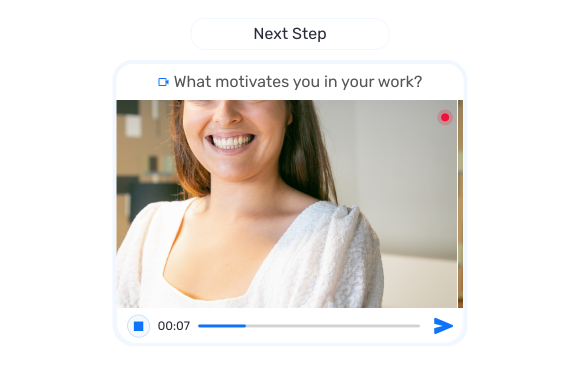
Screen candidates with structured video, audio, and conversational interviews.
AI recruiter
Ask Clara, your recruiting assistant, anything about any candidate in your hiring pipeline.
Candidate assessments
Validate cognitive ability, behavioural fit, and job-specific skills.