Pre-Employment Assessments: A Guide for Recruiters
August 2026 / 8 min read / Written by our editorial team
Recruiters can only learn so much from a resume or an interview. Both provide valuable information, but they don't always reveal how someone thinks, solves problems, or performs in a role.
Pre-employment assessments fill those gaps by measuring job-relevant skills and providing objective data to support hiring decisions.
This guide explains what a pre-employment assessment is, the different types available, and how to use pre-employment assessment software to build a more effective, evidence-based hiring process.
Key takeaways
- Pre-employment assessments measure job-relevant skills, abilities, personality traits, and potential, helping recruiters make more informed hiring decisions.
- Standardized assessments help reduce subjectivity, improve consistency, and identify candidates with the greatest potential to succeed.
- The best talent assessment solutions bring assessments, resume screening, and interviews together into one streamlined hiring workflow.
What Are Pre-Employment Assessments?
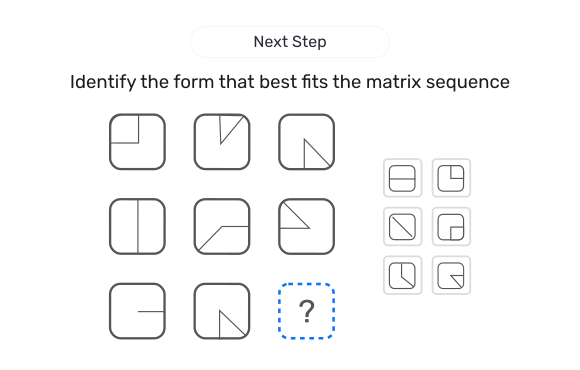
Pre-employment assessments are a type of test that measures whether candidates hold the skills and personal characteristics needed to succeed in a role. They are used by employers to provide quantifiable data of candidates and can help to filter the candidate pool, highlighting those that have the most chance of future success.
Pre-employment testing may evaluate cognitive ability, technical ability, personality traits, behavioral patterns, communication skills, language proficiency, physical capabilities, or other job-related competencies.
Unlike resumes or traditional interviews, which can be subjective, pre-employment exams provide standardized data that help recruiters compare candidates more consistently. Candidate tests can be introduced at almost any stage of the hiring process and can be used on their own or alongside other screening tools.
In a nutshell: A pre-employment assessment is a standardized way to measure job-relevant skills, abilities, and behaviors before making a hiring decision.
The 7 Types of Pre-Employment Assessments
There isn't a single pre-hiring assessment that works for every role. The right candidate test depends on what you're trying to discover, whether that's technical ability, problem-solving, communication, leadership potential, or cultural fit.
The best pre-employment assessment tools offer you the possibility to customize high-quality and validated assessments that best fit the role or hiring stage.
Why Pre-Employment Assessments Improve Hiring
Pre-hire testing helps recruiters make better hiring decisions by adding objective data to the recruitment process. Instead of relying solely on resumes or interviews, they assess the skills, abilities, and traits most relevant to success in the role.
But why are they important?
Schmidt & Hunter analyzed 85 years of hiring research and found that pre-hiring assessments combined with structured interviews are among the strongest predictors of future job performance, outperforming resumes, experience, and unstructured interviews alone.
1. Experience to Evidence
Resume screening tells you where someone has worked, the qualifications they've earned, and the responsibilities they've held in earlier positions. But what doesn't always show is whether they've kept those skills, how they'll apply them in a new environment, or how they'll perform when faced with real workplace challenges. A candidate may have an impressive employment history, but that alone isn't proof that they'll succeed in your organization.
Pre-employment exams measure the skills and abilities needed for the role, while interviews reveal communication style, motivation, and cultural fit. When combined, resumes, assessments, and interviews offer a better overall view of each candidate than any single hiring method can offer.
2. Make More Objective Hiring Decisions
Pre-employment assessments evaluate every candidate against the same criteria, generating standardized, measurable data on their skills, knowledge, and behaviors.
This makes it easier to compare applicants fairly, identify strengths and areas for development, and make hiring decisions based on evidence rather than intuition.
3. Assess the Skills That Matter Most
Different roles require different capabilities, which is why no single assessment fits every vacancy. Modern pre-employment assessment software allows recruiters to select assessments based on the competencies that matter most for the role.
For example, software engineers may complete coding and cognitive assessments, while sales professionals might be assessed on communication, personality, and situational judgment. This targeted approach makes pre-employment testing more relevant and more predictive of on-the-job success.
4. Support Employee Development Beyond Hiring
Assessment results remain valuable after a candidate accepts the job offer. They can help managers identify strengths, uncover skill gaps, and tailor onboarding or training programs to the individual.
By understanding where employees may need additional support, organizations can accelerate development and help new hires reach their full potential sooner.
5. Save Time Without Sacrificing Quality
Many pre-employment assessment tools are quick to administer, automatically scored, and easy to integrate into existing recruitment workflows.
Instead of spending hours manually reviewing every application, recruiters can quickly identify candidates who demonstrate the skills needed for the role and invest more time interviewing the strongest applicants. This helps streamline the hiring process while supporting a high standard of candidate evaluation.
What Pre-Employment Assessments Can't Tell You
While pre-employment assessments are valuable hiring tools, they aren't designed to replace recruiter judgment. Recruiters and hiring managers should be responsible for analyzing and understanding the data learned from pre-hire testing and making the final judgment.
Assessments Aren't a Complete Hiring Solution
No single assessment can tell you everything about a candidate. The best hiring decisions combine pre-employment assessment tests with resume screening, live or asynchronous interviews, and other screening software to build a more complete picture of each candidate. Platforms like Hire-Match offer unified screening tools for recruiters looking for an end-to-end solution.
Keep Assessments Relevant
Asking candidates to complete long or irrelevant assessments can increase candidate drop-off and create avoidable fatigue in the hiring process.
Instead, choose assessments that are directly relevant to the role. For example, managers may benefit from situational judgment and behavioral assessments, while software developers are better evaluated through coding and technical assessments. A targeted assessment strategy is more efficient for recruiters and provides a better candidate experience.
Some Qualities Need a Human Conversation
Assessments can measure skills, reasoning, and personality traits, but they can't fully capture qualities like rapport, authenticity, or how someone communicates in a real conversation. That's why interviews remain an essential part of the hiring process.
To summarize:
- Assessments should be combined with other screening tools for increased accuracy.
- Only choose assessments that are relevant to a specific role and will provide the necessary information.
- Human interaction and interviews are still a fundamental aspect of the hiring process.
Hire-Match: A Good Example of Quality Pre-Employment Assessment Software?
If you’re looking for pre-employment software, consider Hire-Match, which offers one of the broadest libraries of pre-employment assessments, allowing recruiters to tailor assessments to each role's requirements.
Available assessment types include:
- Cognitive ability tests
- Behavioral assessments
- Personality assessments
- Culture fit assessments
- Technical assessments
- Coding assessments
- Language tests
- Gamified assessments
- Virtual job simulations
- Role-specific assessments
Built by the team behind JobTestPrep, one of the world's largest providers of candidate assessment prep, Hire-Match combines AI resume screening, pre-hiring assessments, AI interviews, and asynchronous video interviews on a single platform.
Why Recruiters Choose Hire-Match
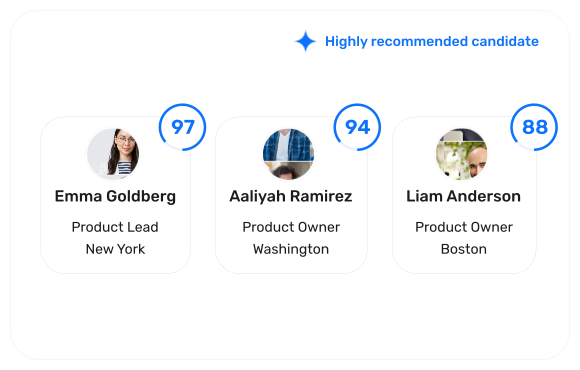
- Integrated candidate scoring combines resume, interview, assessment, and video interview data into a single candidate profile.
- The dashboard automatically ranks the top candidates using transparent, explainable metrics.
- ATS integrations connect with more than 50 applicant tracking systems.
FAQs
Pre-employment assessments can be introduced at almost any stage of the hiring process, but many employers use them early to find the strongest candidates before interviews. This is particularly valuable for high-volume hiring, as assessments can quickly surface candidates with the right skills, even those whose potential may not be obvious from their resume alone.
Track how assessment scores compare with employee performance after six to twelve months. If candidates who score highly consistently become top performers, your pre-employment testing strategy is leading you to the right candidates. Otherwise, there may still be some kinks to figure out in your workflow.
Yes, when they're scientifically validated and relevant to the role. Unlike resumes or interviews, skills tests provide objective, measurable evidence of a candidate's abilities, making them a more reliable predictor of future job performance when used alongside other hiring methods. Decades of research, including Schmidt and Hunter's landmark meta-analysis, have shown that structured assessments are among the strongest predictors of job performance, especially when combined with structured interviews.
A pre-employment assessment tool is software that allows recruiters to create, administer, and score assessments during the hiring process. Depending on the platform, it may include cognitive ability tests, personality assessments, coding tests, language assessments, situational judgment tests, and other role-specific evaluations.
The best assessment platform depends on the type of hiring you're doing. Hire-Match offers one of the broadest assessment libraries and combines assessments with AI resume screening, AI interviews, and video interviews in a single workflow. Other well-known pre-employment assessment tools include TestGorilla for general skills testing, Codility for coding and technical assessments, and HackerRank for software engineering and programming roles.
Many modern pre-employment assessment software often includes question randomization, time limits, proctoring, browser monitoring, and AI-assisted integrity checks. However, it’s important that recruiters are selective when choosing a pre-employment assessment tool as some have limited software and are more susceptible to cheating than others. Combining assessments that include anti-cheat controls with additional screening methods makes it much harder for candidates to misrepresent their abilities.
All our recruitment solutions
Resume screening software
Turn a pile of resumes into a ranked shortlist, backed by clear hiring evidence.
Interview software
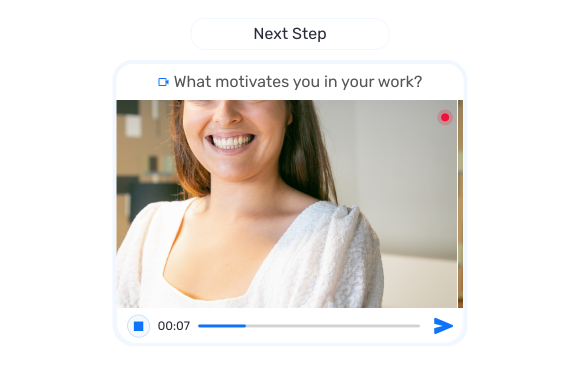
Screen candidates with structured video, audio, and conversational interviews.
AI recruiter
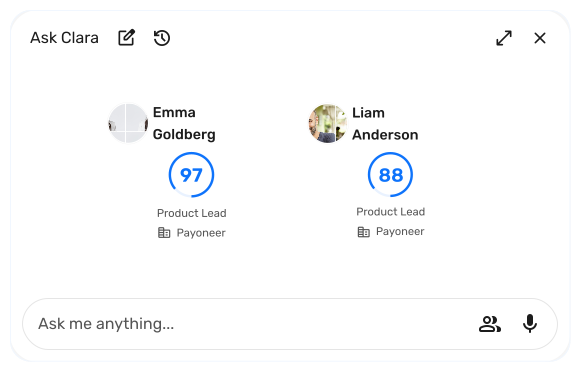
Ask Clara, your recruiting assistant, anything about any candidate in your hiring pipeline.
Candidate assessments
Validate cognitive ability, behavioural fit, and job-specific skills.