AI Sourcing: A Guide for Recruiters
September 2026 / 11 min read / Written by our editorial team
Finding the right candidate among the increasingly large talent pools is like searching for a needle in a haystack.
It can often feel like an impossible task, but AI sourcing is the metal detector narrowing down the search by understanding the job requirements, scanning talent pools faster, and surfacing the strongest candidates.
In this guide, we'll explain how AI sourcing works, where it can save you time, and how to use it effectively so you can focus on interviewing the strongest candidates and making the right hiring decisions.
Key Takeaways
- AI sourcing helps recruiters find candidates by defining search criteria, generating job descriptions, searching for larger talent pools, and prioritizing relevant prospects.
- AI can improve candidate matching by looking beyond exact keywords to relevant, transferable, and adjacent skills.
- Automated candidate sourcing saves manual search time and can help recruiters build more relevant pools of potential candidates.
- AI sourcing can integrate with your ATS, helping you rediscover existing candidates alongside new talent.
What is AI Sourcing?
AI sourcing is the use of artificial intelligence to help recruiters find and prioritize potential candidates for an open role.
Instead of manually searching individual databases and relying on exact job titles or keywords, recruiters can use AI to search networks such as LinkedIn, job boards, or existing talent pools within your own ATS.
AI sourcing is part of a much broader screening process, and some platforms, like Hire-Match, even offer sourcing, resume screening software, candidate assessments, video interviews, and collect the data to create ranked shortlists of the strongest candidates.
AI sourcing considers which candidates are worth considering, and candidate screening software asks why you should move forward with those applicants.
AI Sourcing vs. Traditional Sourcing
Traditional sourcing refers to recruiters manually searching for candidates, which is the traditional process of finding talent before the rise of AI. Traditional and AI sourcing both have the same goal of finding relevant candidates for an open position. The main difference is how much of the search and matching process is handled manually.
Traditional sourcing gives recruiters direct control over every search, while AI can automate repetitive tasks, search larger talent pools, and identify connections between skills and experience that aren't always obvious from keywords alone.
Using AI in sourcing doesn’t mean that recruiters aren’t involved in sourcing candidates at all. In fact, AI candidate sourcing works best when recruiters remain at the helm. Typically, recruiters keep control over search criteria, review the AI's recommendations, and decide which candidates to contact.
How Does AI Sourcing Work?
AI sourcing typically starts with understanding who you're looking for and ends with a shortlist of potential candidates for recruiters to review. Automated talent sourcing can handle much of the searching and matching in between, while recruiters are responsible for setting requirements and deciding who to approach.
Here's how AI talent sourcing typically works:
1. Define the Role and Hiring Criteria
Before the AI can find candidates, it needs to understand what you're looking for. It can then analyze information about a role to identify:
- Required skills and experience
- Preferred qualifications
- Must-haves vs. nice-to-haves
- Relevant or transferable skills
- Suitable job titles and career backgrounds
AI can also help turn these requirements into search criteria or draft a job description. While this can save time, recruiters should always review AI-generated job adverts and requirements before using them.
2. Search Internal and External Talent Pools
AI can then use these criteria to search for potentially relevant candidates across supported talent sources, such as:
- Professional networks such as LinkedIn
- Candidate databases
- Job boards
- ATS records
- Recruiting CRMs
- Previous applicants
- Existing talent communities
- Social media
This allows recruiters to search a much broader pool of candidates without manually repeating searches across every available database.
3. Use Semantic Search to Find Relevant Candidates
Many automated sourcing tools use semantic search, which looks at the meaning and context behind a search rather than relying entirely on exact keywords.
For example, a recruiter might search:
"Find customer service managers with experience leading large teams in a fast-paced environment who could transition into an operations manager role."
AI can interpret "leading large teams" as experience managing or supervising employees. It may associate "fast-paced" with environments such as retail, hospitality, or contact centers and identify transferable skills such as workforce management, KPIs, scheduling, and resource planning.
As a result, someone doesn't necessarily need "operations manager" on their resume to appear in the results. This can help recruiters discover relevant candidates who may be missed by traditional sourcing using rigid keyword searches.
4. Identify Passive and Adjacent Talent
AI sourcing isn't limited to people actively applying for jobs. It can also help recruiters discover passive candidates and people whose backgrounds don't perfectly follow the expected career path.
For example, AI may surface candidates with:
- Transferable skills
- Adjacent industry experience
- Alternative job titles
- Nontraditional career paths
- Relevant experience in a different type of role
The aim isn't for AI to decide that someone should be hired. Instead, it highlights people who appear worth investigating, giving recruiters a broader starting point.
5. Rediscover Existing Talent
Over time, organizations can accumulate thousands of previous applicants, referrals, former employees, sourced prospects, talent community members, and silver-medalist candidates who performed well but weren't selected for a previous role.
Talent rediscovery uses AI to compare existing candidate data in your ATS against new job requirements and resurface people who may now be relevant.
6. Prioritize Talent for Recruiter Review
Finally, AI can prioritize sourced candidates based on how closely their available skills, experience, and other job-related information align with the search criteria.
This is where sourcing begins to overlap with screening. However, the AI is telling you which applicants are worth considering rather than deciding who should progress through the hiring process. Once sourced candidates enter the recruitment process, you can use additional candidate screening methods, such as resume screening, assessments, and interviews, to evaluate them in more depth.
What Are the Benefits of AI Sourcing?
The best ai sourcing tools can make candidate discovery faster and more scalable, while helping recruiters search beyond the candidates they might find through traditional methods.
The main benefits include:
Faster Candidate Discovery
Manually building searches, switching between talent databases, and reviewing profiles can take hours. AI can automate much of this work and prioritize potentially relevant candidates for recruiters to investigate first.
Larger Searchable Talent Pools
AI can run searches across larger talent pools and analyze more profiles than would be possible to review manually. This could include external candidate databases, professional networks, previous applicants, and candidates already stored within your ATS or CRM.
Better Discovery Beyond Exact Keywords
AI-powered semantic search can consider skills, experience, context, and related concepts rather than relying entirely on exact keywords. LinkedIn's 2025 Future of Recruiting research also found that companies conducting the most skills-based searches were 12% more likely to make a quality hire.
Make Better Use of Existing Candidate Data
Talent rediscovery allows AI to compare previous applicants and prospects against new vacancies, helping recruiters get more value from candidate data they've already collected instead of beginning every search from scratch.
Scale Sourcing Without Scaling Manual Work
Automating repetitive searches, profile matching, and initial prioritization means sourcing activity can increase without requiring recruiters to manually repeat every step for every role. This can be a gamechanger when sourcing for multiple positions.
Give Recruiters More Time for Human-Led Work
In LinkedIn's report, talent acquisition professionals already using generative AI reported an average 20% reduction in their workload. Recruiters can reinvest that time in work where human involvement matters more, such as speaking with candidates, conducting interviews, collaborating with hiring managers, and building relationships.
What Are the Challenges of AI Talent Sourcing?
AI sourcing can save recruiters significant time, but that doesn't mean recruiters can completely check out of the sourcing process. Human oversight, choosing the right technology, and transparency are vital parts of the process for a successful hiring workflow.
Bias Can Influence Search Results
Historical hiring data, biased datasets, or overly restrictive search criteria can influence which candidates are surfaced and which are overlooked. Recruiters should use job-relevant criteria, regularly audit sourcing results for unexplained patterns, and choose software with bias monitoring and safeguards.
Candidate Data Isn't Always Accurate
AI can only work with the information available to it. Candidate profiles and resumes may be incomplete, outdated, or missing important context. Recruiters should treat AI recommendations as a starting point rather than an absolute measure of someone's suitability.
Candidates May Be Wary of AI
Not every candidate is comfortable with AI being used in recruitment; in fact, a survey by Gartner shows just 26% of applicants trust that AI will evaluate them fairly.
Explain where and how AI is used where appropriate, preserve human interaction where it matters, and make sure candidates aren't left feeling as though they're interacting with automated systems throughout the entire hiring process.
Data Privacy and Compliance
AI sourcing may involve processing candidate information across professional networks, databases, your ATS, CRM, and other integrated systems. Introducing additional technology can therefore create new data privacy and security considerations. Recruiters should also understand where candidate data comes from, how it's processed, and where it's stored before integrating new software into their hiring stack.
How to Use AI Sourcing Effectively
AI talent sourcing can make candidate discovery faster, more expansive, and highly efficient, but automated sourcing always works best when combined with human judgement. Start with clear, job-related sourcing criteria, and use AI to explore transferable skills, adjacent experience, and alternative career paths that could uncover candidates you may otherwise miss. Search both external talent sources and your existing ATS. Before moving forward to the next stage, you should always review the list of AI recommendations.
The right AI candidate sourcing software can bring these capabilities together and connect candidate discovery with the rest of your recruitment workflow. Hire-Match combines AI sourcing with other candidate screening processes to help recruiters move from discovering potential talent to identifying stronger candidates to progressing through to hire.
FAQs
Talent rediscovery is the process of finding suitable candidates within an organization's existing talent database. AI can compare new job requirements against previous applicants, sourced prospects, referrals, and other candidates stored in an ATS or CRM, helping recruiters reconsider people who may be a good fit for a new opportunity.
Yes. AI candidate sourcing can help identify passive candidates who aren't actively applying for a position, but whose skills and experience appear relevant. Depending on the sourcing software and data sources available, recruiters can discover these candidates through professional networks, talent databases, existing talent communities, and other supported sources.
Recruiters can use AI talent sourcing to automate or improve repetitive parts of candidate discovery. For example, AI can help define search criteria, search internal and external talent pools, identify transferable skills, rediscover previous candidates, and prioritize potential matches. Recruiters can then review the results and decide who to approach.
Many AI sourcing tools integrate with applicant tracking systems (ATSs) and recruiting CRMs. This allows the AI to search and rediscover candidates already stored in your recruitment systems, while keeping candidate information and sourcing workflows connected. Exact capabilities depend on the sourcing tool and integration available.
AI sourcing can make candidate searches more consistent and skills-focused, but AI isn't inherently unbiased. Its recommendations can still be influenced by historical data, algorithms, and the search criteria recruiters provide. Human oversight, job-relevant criteria, regular monitoring, and the right bias safeguards remain important.
AI finds candidates by analyzing job requirements and using them to search relevant talent sources, such as candidate databases, professional networks, ATS records, and recruiting CRMs. AI sourcing can also use semantic matching to identify related skills, experience, and job titles rather than relying only on exact keyword matches.
All our recruitment solutions
Resume screening software
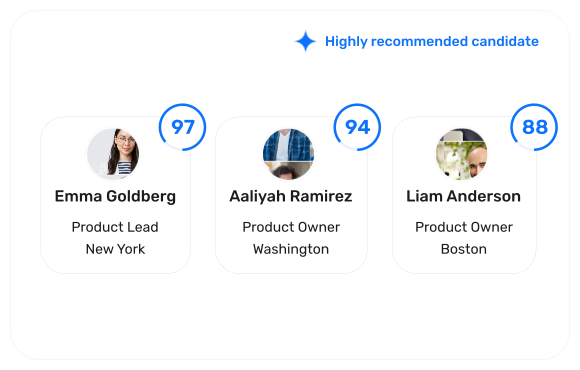
Turn a pile of resumes into a ranked shortlist, backed by clear hiring evidence.
Interview software
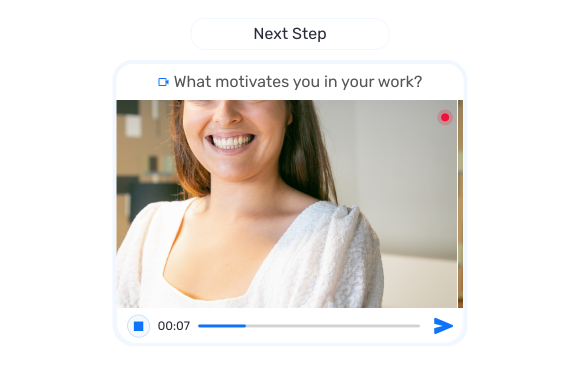
Screen candidates with structured video, audio, and conversational interviews.
AI recruiter
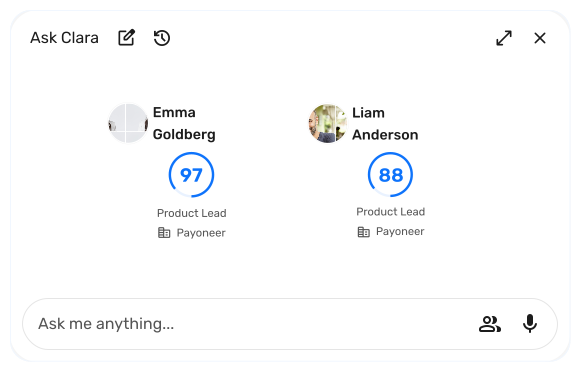
Ask Clara, your recruiting assistant, anything about any candidate in your hiring pipeline.
Candidate assessments
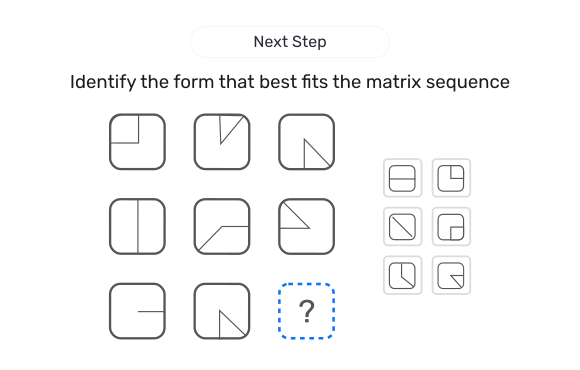
Validate cognitive ability, behavioural fit, and job-specific skills.