AI Recruiting: A Guide for Recruiters
August 2026 / 12 min read / Written by our editorial team
Do you have an inbox that never seems to stop growing? For many recruiters, that's become the new normal. As hiring demands continue to increase, manually sourcing candidates, screening resumes, and evaluating talent is no longer sustainable.
AI in recruiting helps hiring teams work smarter by identifying stronger candidates faster, reducing manual work, and supporting better hiring decisions.
This guide explores how to use AI in hiring without hurting the candidate experience, where it delivers the best value and what to look for when choosing an AI recruiting platform.
Key takeaways
-
AI recruiting supports recruiters by analyzing candidate data, finding top talent, and providing evidence-based recommendations to help recruiters make better hiring decisions.
-
AI recruiting provides intelligent support, including sourcing, resume screening, candidate shortlisting, talent rediscovery, interviews, assessments, recruiting assistants, job descriptions, and analytics.
-
The best AI recruiting platforms provide transparent, explainable recommendations, reduce bias, and support recruiter judgment rather than replacing it.
-
AI recruiting reduces manual work, broadens talent pools, improves candidate experience, accelerates hiring, and gives recruiters more time for high-value tasks.
-
AI should enhance recruiter expertise, but human insight remains essential while people continue to make final hiring decisions and assess interpersonal skills and cultural fit.
What Is AI Recruiting?
AI recruiting is the use of artificial intelligence to help recruiters make faster, more informed hiring decisions throughout the recruitment process.
While traditional recruiting relies on manually reviewing resumes, comparing qualifications, and interpreting interview feedback, this is becoming less possible in modern-day hiring as application volumes continue to increase. Recruiter expertise remains essential, and AI in hiring thrives when used alongside recruiters, not in place of them.
As a result, AI recruiting has quickly become a core part of hiring, with 83% of companies now using AI-driven tools during recruitment to speed up or make hiring more efficient.
Unlike traditional hiring methods, AI for recruiting can:
- Analyze large amounts of hiring data in seconds.
- Identify candidates with relevant skills and experience.
- Surface talent that may otherwise be overlooked
- Provide recruiters with structured insights to support better hiring decisions.
Instead of spending hours gathering information, recruiters can focus on evaluating candidates, building relationships, and making confident hiring decisions.
Today, artificial intelligence in recruitment supports almost every stage of hiring, from sourcing candidates and screening resumes to AI interviews, talent assessments, interview intelligence, and recruiting analytics. Rather than referring to a single tool, AI recruiting is an umbrella term that covers a wide range of AI-powered technologies used throughout the hiring process.
Note: AI recruiting and recruitment automation have different goals. AI recruiting helps recruiters make better hiring decisions through intelligent analysis and recommendations, while recruitment automation streamlines repetitive tasks such as interview scheduling, job posting, and candidate communications. Learn more in our guide to recruitment automation.
How AI Is Used Throughout the Hiring Process
AI recruiting tools offer a wide range of capabilities to support recruiters throughout the hiring process. While some organizations use standalone solutions for specific tasks, many modern recruiting platforms combine multiple AI capabilities into a single platform. For example, platforms like Hire-Match combine AI sourcing, resume screening, interviews, talent assessments, and recruiting analytics into a single workflow, reducing the need for multiple standalone tools.

Whether you're exploring AI-based recruitment for the first time or expanding your existing hiring technology, understanding how these capabilities work together will help you choose the right solution.
AI Candidate Sourcing
AI candidate sourcing uses AI to search internal databases, job boards, and professional networks to identify candidates who closely match your hiring criteria. Rather than relying on keyword searches alone, more advanced AI can evaluate skills, experience, career progression, and transferable skills to surface qualified candidates that recruiters might otherwise miss. For organizations using AI for recruiting, candidate sourcing is often one of the quickest ways to reduce manual workload while expanding the talent pool.
Why recruiters use it
- Finds qualified candidates faster.
- Expands talent pools beyond active applicants.
- Identifies candidates with transferable skills.
- Reduces manual sourcing time.
Tip: When evaluating AI sourcing tools, look for platforms that assess candidates based on skills, experience, and potential rather than simple keyword matching. Candidates have outsmarted traditional keyword matching tools and can optimize their resumes in seconds. This means the strongest candidate on paper isn’t always the best candidate for the role. Intelligent AI tools that evaluate skills, experience and potential ensure you’re shortlisting the candidates who genuinely have the most chance of success.
AI Resume Screening & Candidate Shortlisting
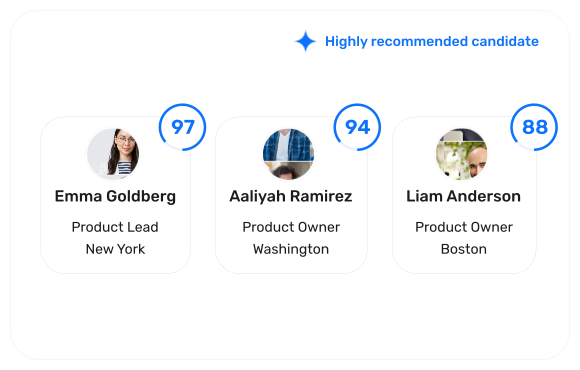
AI resume screening software and candidate shortlisting help recruiters quickly identify the strongest applicants from large candidate pools. Rather than simply matching keywords, more advanced AI recruiting tools evaluate skills, experience, career progression, and transferable skills to rank candidates based on overall fit.
Why recruiters use it
- Reviews hundreds of resumes in minutes.
- Prioritizes the strongest candidates for each role.
- Creates more consistent and objective screening.
- Reduces the time spent manually reviewing applications.
Recruiter tip: Look for AI recruiting platforms that provide transparent candidate rankings and explain why applicants are recommended, allowing recruiters to review every shortlist rather than relying on black-box scores.
Talent Rediscovery
Talent rediscovery uses AI to automatically match previous applicants and candidates in your talent database to newly opened roles. Instead of starting every search from scratch, recruiters can quickly reconnect with qualified candidates who have already shown interest in the organization.
Why recruiters use it
- Reduces time spent sourcing new candidates.
- Makes better use of existing talent pools.
- Helps fill roles faster with pre-qualified candidates.
- Re-engages strong candidates who were previously overlooked.
Recruiter tip: Choose AI recruiting platforms that continuously match candidates to new vacancies automatically, helping you uncover qualified talent without relying on manual database searches.
AI-Generated Candidate Outreach
AI-generated candidate outreach helps recruiters create personalized emails and text messages tailored to each candidate's skills, experience, and career background. It can also recommend the best messaging approach, making it easier to engage qualified candidates at scale without sacrificing personalization.
Why recruiters use it
- Creates personalized outreach in seconds.
- Increases recruiter productivity.
- Delivers more consistent candidate communication.
- Helps engage passive candidates more effectively.
Recruiter tip: The best AI recruiting tools personalize outreach while still giving recruiters full control to review, edit, and tailor messages before they're sent.
AI Interviews & Interview Intelligence
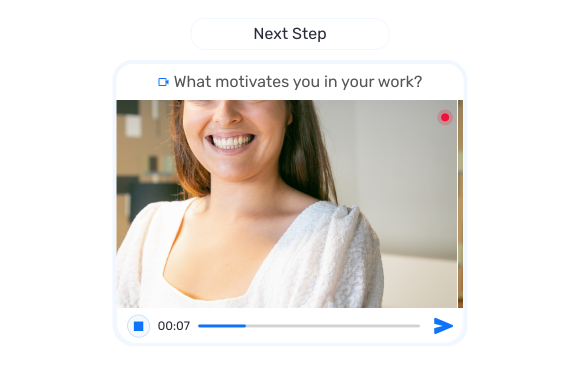
AI interview software help recruiters evaluate candidates more efficiently through structured interview questions, while interview intelligence analyzes responses to generate transcripts, summaries, and key hiring insights. Together, they offer a more consistent way to assess candidates while giving recruiters richer evidence to support hiring decisions.
Why recruiters use it
- Screens more candidates in less time.
- Creates a consistent interview experience.
- Automatically summarizes interview responses.
- Makes it easier to compare candidates objectively.
Recruiter tip: Look for AI interview tools that combine structured interviews with follow-up insights, giving recruiters a more complete picture of every candidate rather than relying on a single interview score.
AI Talent Assessments
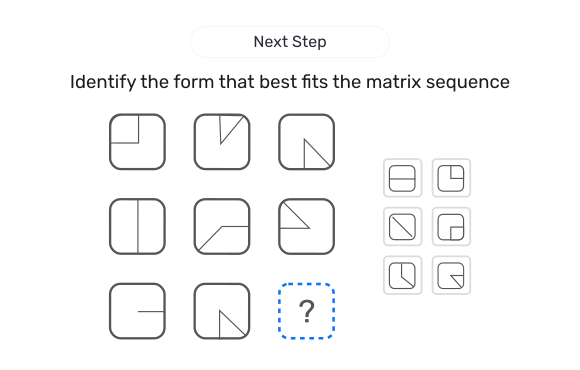
Talent assessment software helps recruiters evaluate candidates' skills, cognitive abilities, and job fit using structured, evidence-based testing. AI can then analyze the results to identify strengths, predict role suitability, and provide recruiters with deeper insights than assessment scores alone.
Why recruiters use it
- Evaluates candidates using objective data.
- Identifies strengths and skill gaps.
- Predicts job fit more accurately.
- Supports more confident hiring decisions.
Recruiter tip: Look for assessment platforms that offer a broad range of validated assessments, including cognitive ability, personality, behavioral, language, and role-specific skills, so you can tailor the hiring process to each position.
AI Recruiting Assistants
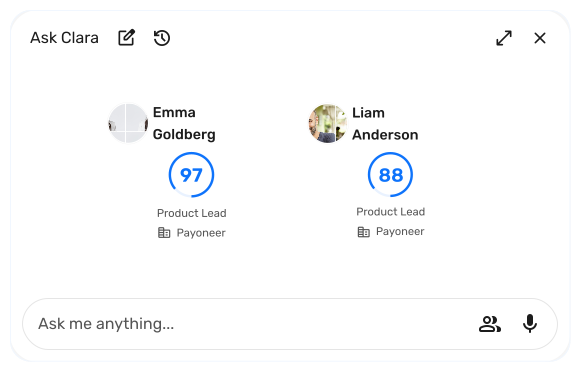
An AI Recruiter acts as an intelligent copilot throughout the hiring process, helping recruiters compare candidates, explain AI recommendations, answer hiring questions, and summarize recruitment data. Instead of replacing recruiters, they make AI insights easier to understand and act on.
Why recruiters use it
- Answers hiring questions instantly.
- Compares candidates’ side by side.
- Explains AI recommendations.
- Reduces time spent reviewing hiring data.
Recruiter tip: The strongest AI recruiting assistants help recruiters explore hiring evidence, compare candidates, and make more confident decisions throughout the hiring process.
AI-Generated Job Descriptions
AI-generated job descriptions help recruiters create tailored job ads in minutes by suggesting role requirements, responsibilities, and skills based on the position being hired. Many tools can also improve readability and identify potentially biased language before a role is published.
Why recruiters use it
- Speeds up job description creation.
- Improves consistency across job ads.
- Helps create more inclusive hiring content.
- Reduces time spent writing from scratch.
Recruiter tip: AI should provide a strong starting point, but recruiters should always review job descriptions to ensure they accurately reflect the role and company.
Recruiting Analytics & Predictive Hiring
Recruiting analytics uses AI to analyze hiring data and identify patterns that help recruiters make better decisions. From predicting candidate success to highlighting bottlenecks in the hiring process, AI turns recruitment data into actionable insights that can improve future hiring outcomes.
Why recruiters use it
- Identifies hiring trends and bottlenecks.
- Measures recruitment performance.
- Supports more data-driven hiring decisions.
- Helps improve future hiring strategies.
Recruiter tip: The most valuable recruiting analytics don't just present data: they provide clear recommendations that help recruiters continuously improve their hiring process.
Why Is Artificial Intelligence in Recruitment Important?
AI-based recruitment is about more than saving time. Using AI for recruiting helps you make better hiring decisions while creating a faster, more consistent hiring process. In fact, recruitment agencies using AI at any stage of the recruitment cycle are 3.5 to 4.5 times more likely to have increased revenue, showing the impact AI can have on hiring performance and business growth.
But how can it help you?
1. Improve Recruiter Efficiency
AI handles many time-consuming tasks, such as sourcing, resume screening, and top-of-the-funnel interviews. This means recruiters have more time to focus on interviewing the strongest candidates, building relationships, and making vital hiring decisions.
2. Make Better Hiring Decisions
Organizations with good artificial intelligence in their workflow excel at analyzing skills, career history, experience, assessment results, and interview data. The AI software then provides evidence-based insights and measurable data to complement recruiter expertise to make more informed and consistent hiring decisions.
3. Reduce Unconscious Bias
Well-designed AI recruiting platforms evaluate candidates against predefined hiring criteria such as skills, qualifications, and experience rather than subjective opinions. Some platforms also support blind hiring by hiding personal information (such as names, age, ethnicity, and gender) during the initial screening process.
4. Expand Your Talent Pool
AI can identify passive candidates, uncover transferable skills, and rediscover previous applicants, helping recruiters find qualified talent they may have otherwise overlooked.
5. Lower Recruitment Costs
Although implementing AI requires an investment, organizations can reduce recruitment costs long-term by filling roles faster, improving recruiter productivity, and spending less time on manual hiring tasks.
Cost can be particularly important when considering AI recruiting tools for startups, which often have tighter budgets. Luckily, many platforms offer pricing models specifically accommodating small and growing teams.
6. Improve Candidate Experience
Faster screening, quicker communication, and shorter hiring processes help create a smoother candidate experience, reducing the drop-off rate and the risk of losing strong applicants to competitors.
7. Turn Hiring Data into Actionable Insights
AI makes it easier to analyze recruitment data and identify opportunities for improvement. Recruiters can monitor metrics such as time-to-hire, candidate drop-off, offer acceptance rates, and quality of hire. More advanced AI recruiting platforms can also identify hiring bottlenecks, forecast recruitment needs, and recommend changes that improve hiring performance over time.
When these capabilities are combined, AI recruiting becomes more than a collection of individual tools. It creates a connected hiring workflow that helps recruiters make smarter and faster decisions from sourcing through to hiring.
Things to Consider Before Implementing AI Recruiting
While AI in recruiting offers significant benefits, understanding the potential drawbacks and how to mitigate them will help you choose the right platform and use AI more effectively.
Candidate Mistrust of AI
Not every candidate is comfortable with AI playing a role in their hiring journey. In fact, 52% of candidates don’t trust AI-led decisions and 49% believe it is an unfair way to screen candidates. To mitigate this, you should be open and honest about AI use and be clear about how it is being used. Mistrust about AI often stems from public perception not understanding how it works or users of AI not disclosing the information transparently.
Overreliance on AI
AI should function as a support for recruiters, not a complete replacement. While AI can analyze data, identify patterns, and recommend candidates, human recruiters remain essential for building relationships, assessing people skills, and making final hiring decisions.
Data Privacy and Security
AI recruiting platforms process large volumes of personal candidate data, so protecting that information should be a top priority. Look for providers that follow regulations such as GDPR, hold recognized security certifications like SOC 2 Type II and ISO 27001, and undergo regular independent audits to verify their security and compliance practices. These measures help reduce the risk of data breaches while ensuring candidate information is overseen securely.
Algorithmic Bias
AI can help reduce bias by evaluating candidates against predefined criteria, but poorly designed models can also reinforce historical hiring patterns. Choose platforms that regularly audit their AI models, check for bias, and provide evidence of their fairness practices.
Black-box Recommendations
Not all AI recruiting tools explain how they reach their recommendations. If recruiters can't see why one candidate was ranked above another, it's difficult to trust the results or make informed hiring decisions. The strongest AI recruiting platforms provide transparent, explainable insights that show exactly which skills, experience, assessments, and other hiring signals influenced each recommendation.
How to Implement AI Recruiting Tools into Your Workflow
Successfully implementing AI-based recruitment starts with understanding where it will have the greatest impact.
Follow these steps to introduce AI into your hiring process:
Step 1: Define your hiring goals
Start by finding the biggest challenges in your current recruitment process. This could be sourcing candidates, screening high application volumes, reducing time-to-hire, or improving hiring quality. Having clear goals will help you choose the right AI recruiting solution.
Step 2: Choose the right AI recruiting platform
Not every AI recruiting platform offers the same capabilities. Consider whether you need a standalone AI tool or a platform that combines multiple AI capabilities into one solution. You should also evaluate the platform’s ATS integrations, capacity for the company size, security certifications, explainable AI, and the specific hiring challenges you want to solve. Some platforms, such as Hire-Match, can work as an end-to-end standalone tool or integrate with your existing ATS.
Step 3: Test the platform before committing
Most AI recruiting providers offer free trials or product demos. Use these opportunities to decide whether the platform feels intuitive to use, fits naturally into your current workflow, and provides recommendations that you can understand and trust.
Step 4: Train your recruitment team
Provide training so your team understands how to interpret AI recommendations, use new features confidently, and combine AI insights with recruiter expertise. Many leading AI recruiting platforms also offer dedicated customer support and implementation guidance to help teams get up and running quickly.
Final Thoughts
Recruiting with artificial intelligence is no longer a future trend, and it’s clear that it's here to stay for the long-term. When implemented effectively, AI can help recruiters hire faster, make more informed decisions, and create a more consistent candidate experience. The most effective platforms provide the insights recruiters need while keeping people firmly in control of every hiring decision.
The Next Step:
If you're ready to see these principles in action, book a demo of Hire-Match. Hire-Match combines AI sourcing, resume screening, interviews, assessments, and explainable recommendations into a single platform, helping recruiters build shortlists they can understand and trust. Every demo includes a free two-week trial with up to two active job openings, so you can experience the platform using your own hiring process.
FAQs
It's very unlikely. AI can automate repetitive tasks such as sourcing candidates, screening resumes, and analyzing recruitment data, allowing recruiters to spend more time interviewing candidates, building relationships, and making informed hiring decisions. However, human judgment remains essential throughout the hiring process, particularly when assessing interpersonal skills and making final hiring decisions.
Some of the leading AI recruiting platforms include Hire-Match, HireVue, and Eightfold AI. To learn more about the top AI recruiting tools and their capabilities, check out our article on the best AI recruiting tools.
AI helps recruiters hire more efficiently by:
- Reducing manual work
- Improving candidate sourcing
- Supporting evidence-based hiring decisions
- Providing actionable recruitment insights.
It can also improve candidate experience through faster hiring processes while helping organizations reduce recruitment costs over time.
AI can search large talent pools in seconds, identify passive candidates, recognize transferable skills, and match candidates to roles based on more than simple keyword searches. This helps recruiters find qualified candidates faster while uncovering talent that may otherwise have been overlooked.
Look for AI recruiting software that provides transparent and explainable recommendations, supports recruiter decision-making, integrates with your existing ATS, follows security standards such as GDPR, SOC 2 Type II, and ISO 27001, and regularly audits its AI models for fairness. The strongest platforms combine multiple AI recruiting capabilities into a single solution while keeping recruiters in control of hiring decisions.
Many enterprise organizations use platforms such as Hire-Match, Workday, Eightfold AI, Paradox, Greenhouse, SmartRecruiters, and HireVue. When comparing enterprise AI recruiting software, consider factors such as scalability, integration, security certifications, compliance, AI transparency, and the range of AI capabilities offered.
All our recruitment solutions
Resume screening software
Turn a pile of resumes into a ranked shortlist, backed by clear hiring evidence.
Interview software
Screen candidates with structured video, audio, and conversational interviews.
AI recruiter
Ask Clara, your recruiting assistant, anything about any candidate in your hiring pipeline.
Candidate assessments
Validate cognitive ability, behavioural fit, and job-specific skills.