Recruitment Automation: A Guide for Recruiters
August 2026 / 9 min read / Written by our editorial team
Recruiting without automation is like trying to bake a cake without the right equipment. You might have all the ingredients, but without a mixing bowl, whisk, or measuring cups, every step takes longer, requires more effort, and leaves more room for mistakes.
Likewise, it's possible to recruit without embracing automation in recruitment, but if technology can remove repetitive work and improve efficiency, why wouldn't you use it?
In this guide, you'll learn what recruitment automation is, how it works, which hiring tasks benefit most from automation, and how to choose the right software for your recruitment process.
Key takeaways
-
Automates repetitive tasks: Use predefined workflows to save time, improve efficiency, and reduce manual work.
-
Automation AI: Elevate your recruitment automation with advanced AI tools that help evaluate candidates and support hiring decisions.
-
Automates every stage: From job posting and resume screening to interview scheduling, approvals, and offer management.
-
Improves hiring outcomes: Reduce time-to-hire, strengthen candidate communication, create consistent workflows, and give recruiters more time for high-value work.
What Is Recruitment Automation?
Recruitment automation is the use of software to automate repetitive tasks throughout the hiring process and move candidates through each stage of the hiring funnel more efficiently.
Put simply, automation in recruitment removes repetitive manual work so recruiters can spend more time engaging with candidates and making better hiring decisions.
We’ll highlight exact examples of recruitment automation further down.
Recruitment Automation Vs AI Recruiting
Recruitment automation and AI recruiting are terms often used interchangeably, but they solve different problems.
Recruitment automation is about doing certain tasks to reduce manual work for recruiters. Meanwhile, AI recruiting helps recruiters find the strongest candidates more efficiently.
Both types of technologies can and should be used simultaneously. While recruitment automation moves candidates through the pipeline by handling repetitive tasks, such as filtering resumes and scheduling interviews, AI recruitment analyzes resumes, performs assessments, and conducts AI and asynchronous interviews to gain deeper insight into each candidate.
What Are Recruitment Automation Tools?
Recruitment automation tools automate repetitive administrative tasks throughout the hiring process.
Rather than replacing recruiters, they execute routine workflows based on predefined rules, helping teams move candidates through the hiring funnel more efficiently while delivering a consistent candidate experience.
Examples of recruitment automation tools:
Together, these tools create a more automated hiring process, allowing recruiters to spend less time on administration and more time engaging with candidates.
Note: Not every type of recruitment process needs to be automated. The right combination depends on your hiring volume, existing recruitment software, and where your team spends the most time on repetitive manual tasks.
What Are the Benefits of Recruitment Automation?
Recruitment automation is becoming an essential part of automation in talent acquisition, helping organizations reduce administrative work while creating a faster, more consistent hiring experience. Understand the key benefits below.
1. Faster hiring and reduced candidate drop-off
Every manual step adds time to the hiring process. Recruitment automation speeds up common tasks such as interview scheduling, candidate communications, and approval workflows, helping candidates move through the hiring funnel more quickly. A faster hiring process also reduces the risk of losing qualified candidates to competitors that act faster.
Did you know you spend an average of two working days per hire across your workload?
2. More time for high-value recruiting
Recruiters shouldn't spend hours sending emails, scheduling interviews, or updating candidate records. Automating these repetitive tasks frees up time for more important jobs, such as building relationships with candidates, conducting late-funnel interviews, and collaborating with hiring managers.
3. Better candidate communication
Consistent communication is one of the biggest contributors to a positive candidate experience. Automated emails, interview reminders, and status updates keep candidates informed throughout the recruitment process, reducing uncertainty and improving engagement.
4. More consistent and organized hiring
Recruitment process automation ensures that every candidate follows the same workflow. Applications are routed correctly, approvals happen in the right order, and hiring teams are automatically notified when action is needed. This creates a more standardized and reliable hiring process while reducing the risk of human error.
5. Better reporting and recruitment insights
Because automated hiring processes record every stage of the recruitment workflow, it's easier to analyze hiring performance over time. Recruiters can use dashboards to find bottlenecks, measure time-to-hire, monitor candidate drop-off, and make data-driven improvements to future hiring campaigns.
Common misconceptions about recruitment automation
Despite becoming a standard part of modern hiring, recruitment automation is still surrounded by misconceptions.
Let’s unpack them below.
“Recruitment automation will replace recruiters.”
Recruitment process automation doesn't replace recruiters. Instead, it removes repetitive administrative work so they can hire more efficiently. By reducing time spent scheduling interviews, sending emails, and managing workflows, recruiters have more time to build relationships with candidates, conduct interviews, and make meaningful hiring decisions.
“Our recruitment process is too unique to automate.”
Most recruitment automation platforms offer customizable workflows, triggers, and approval processes that can be tailored to different hiring teams, departments, or locations. Rather than forcing organizations into a rigid process, automation is often designed to adapt to existing workflows.
“Automation will lead to lower-quality hires.”
Automation doesn't decide who gets hired. Its main job is to ensure the hiring process runs more efficiently and consistently. By eliminating administrative bottlenecks and improving communication, recruiters can spend more time evaluating candidates instead of managing repetitive tasks, supporting better hiring outcomes.
“Recruitment automation is too complicated.”
Modern recruitment automation software is designed to be accessible for organizations of all sizes. Many platforms offer no-code workflow builders, preconfigured templates, onboarding assistance, and ongoing customer support, making implementation much simpler than many recruiters expect.
How to Automate Your Recruitment Process
Implementing recruitment automation isn't about automating every part of your hiring process overnight. Successful recruitment process automation starts with understanding where your current hiring workflow creates unnecessary manual work.
1. Review your current hiring process
Map out each stage of your recruitment process, from posting a job to sending an offer. Look for repetitive administrative tasks, communication delays, or manual handoffs that slow hiring down or create unnecessary work.
2. Prioritize your biggest bottlenecks
Not every recruitment task needs to be automated at once. Start with the areas that have the biggest impact on recruiter productivity or candidate experience. For example, if candidates wait days for interview invitations, automating interview scheduling can significantly reduce delays. If recruiters spend hours manually updating candidates, automated email workflows and reminders can save valuable time.
3. Choose software that fits your workflow
Decide whether you need a standalone recruitment automation platform or one that integrates with your existing applicant tracking system (ATS). If you already have an ATS, integrated automation keeps everything in one workflow and reduces duplicate work. If you're building your recruitment technology stack from scratch, a standalone platform with built-in automation features may be a better fit.
4. Train your hiring team
Automation is only effective if people know how to use it. Make sure recruiters, hiring managers, and anyone involved in the hiring process understand how workflows operate, when manual intervention is needed, and how to troubleshoot common issues. Many recruitment software providers also offer onboarding, training resources, and ongoing customer support.
5. Measure and optimize your results
Monitor key recruitment metrics such as time-to-hire, candidate response rates, interview scheduling time, and candidate drop-off. Regularly reviewing this data helps you identify which automations are delivering value and where workflows can be refined or expanded over time.
The Next Step
Recruitment automation is about removing the repetitive work that slows hiring down. By automating routine tasks such as candidate communications, interview scheduling, approvals, and workflow management, recruiters can spend less time on administration and more time building relationships, evaluating candidates, and making confident hiring decisions.
As automation in talent acquisition continues to evolve, many platforms now combine recruitment automation with AI recruiting to create a more complete hiring solution. Rather than simply automating workflows, these platforms can also help recruiters screen resumes, rank candidates, conduct structured interviews, and evaluate the top candidates while creating a more automated hiring process without sacrificing recruiter oversight or candidate experience.
Bringing recruitment automation and AI recruiting together
If you're looking for a platform that combines both recruitment automation and AI recruiting tools, Hire-Match is an easy decision.

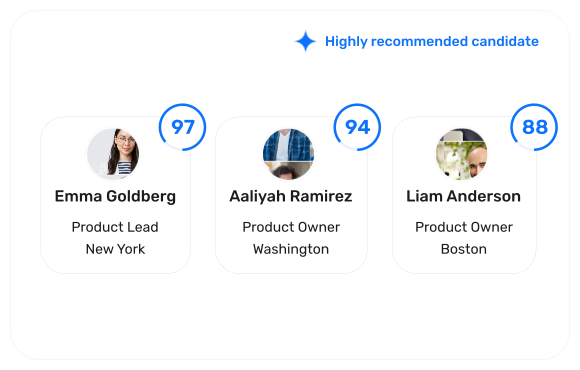
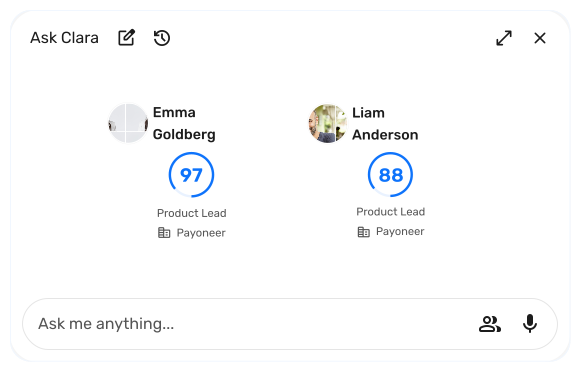
It automates repetitive hiring tasks such as candidate communications, interview scheduling, and workflow management, while also providing AI-powered resume screening, candidate ranking, AI or async interviews, and talent assessments. Clara, Hire-Match’s AI Recruiter supports recruiter judgement and allows you to ask questions and validate missing information. This allows recruiters to streamline the hiring process without sacrificing the quality of their hiring decisions.
Hire-Match can also work as a standalone tool or integrate with your existing ATS.
FAQs
Most recruitment automation platforms offer live demos, so you can see how the software fits into your hiring process before committing. Many also provide free trials or pilot programs. For example, Hire-Match offers a 30-minute personalized demo and a free two-week trial with up to two active job openings, allowing recruiters to experience AI resume screening, candidate ranking, interviews, and assessments using real vacancies.
Yes. Recruitment automation helps candidates receive faster responses, more consistent communication, and shorter hiring timelines. This is important because reports show that 52% of candidates wait three months or longer to receive any update on their application status. By automating tasks such as application confirmations, interview scheduling, status updates, and rejection emails, organizations can reduce uncertainty, improve the candidate experience, and minimize candidate drop-off.
Recruitment automation has become mainstream, with organizations of all sizes using it to streamline hiring. Major employers including Amazon, Mastercard, Disney, and IBM have adopted AI and automation within their recruitment processes. Adoption is continuing to grow, with 93% of Chief Human Resources Officers (CHROs) reporting that they have begun using AI within their organizations, highlighting how automation is becoming a standard part of modern hiring.
Start with the most repetitive and time-consuming tasks, such as job posting or resume screening. Automating these administrative processes typically delivers the quickest return on investment while allowing recruiters to focus on interviewing candidates and making hiring decisions.
Yes. Most recruitment automation tools integrate with existing applicant tracking systems (ATS), so candidate data and hiring workflows can move automatically between platforms. If you do not already use an ATS, we recommend an all-in-one recruitment platform like Hire-Match, which includes built-in automation features.
All our recruitment solutions
Resume screening software
Turn a pile of resumes into a ranked shortlist, backed by clear hiring evidence.
Interview software
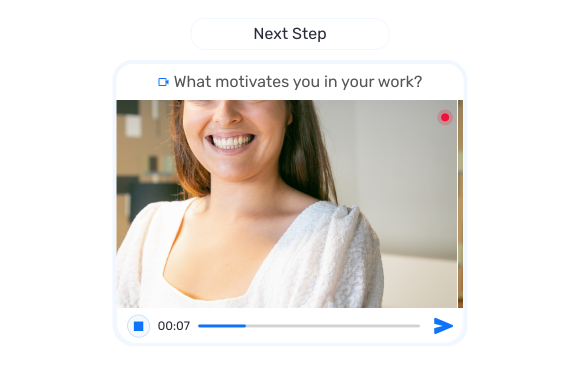
Screen candidates with structured video, audio, and conversational interviews.
AI recruiter
Ask Clara, your recruiting assistant, anything about any candidate in your hiring pipeline.
Candidate assessments
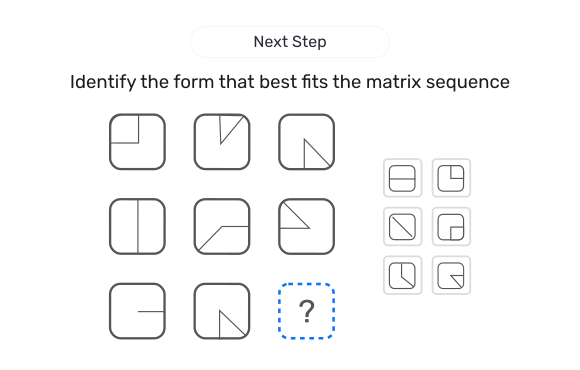
Validate cognitive ability, behavioural fit, and job-specific skills.