High-Volume Recruiting: A Practical Guide for Recruiters
August 2026 / 9 min read / Written by our editorial team
Hiring one person is straightforward, but hiring hundreds of employees within a short timeframe is a completely different challenge. As application numbers increase, each stage of the hiring process becomes more demanding.
High-volume recruiting requires a scalable, structured approach and AI-assisted software can help streamline this process.
In this guide, we'll explain what high-volume recruiting is, when it's used, the challenges it creates, and high-volume recruiting strategies for a more manageable recruitment workflow.
Key takeaways
- High-volume recruiting requires a different approach. As hiring volumes grow, manual tasks become harder to manage, making consistency, speed, and scalability strategies essential.
- The biggest challenges happen at scale. Large applicant pools, slow manual screening, interview bottlenecks, candidate drop-off, and inconsistent evaluation can all reduce hiring efficiency and quality.
- Successful high-volume hiring relies on structured processes. Clear hiring criteria, optimized application screening, seamless automation, structured interviews, and role-relevant assessments help recruiters hire faster without compromising quality.
- AI strengthens the recruitment process. AI-powered screening, candidate matching, AI interviews, and ATS integrations reduce administrative work, so recruiters can focus on evaluating the strongest candidates.
- Measure the entire hiring funnel. Tracking metrics such as time to shortlist, candidate drop-off, cost per hire, quality of hire, and early retention helps teams continuously improve their recruitment process.
What Is High-Volume Recruiting?
High-volume recruiting is the process of hiring large numbers of employees over a short period of time or continuously recruiting for roles with consistently high applicant volumes.
Rather than filling one or two positions with a small handful of resumes to review, recruiters may need to review hundreds or even thousands of applications. Although there is no universal standard for what counts as high-volume recruiting, it typically begins when increased demand outweighs the recruiters’ time for manually reviewing applications.
When Is High-Volume Recruiting Used?
Businesses use high-volume hiring whenever they need to recruit at scale.
This may be due to:
- Seasonal demand: Retailers hiring additional staff for the holiday shopping season or hospitality businesses recruiting for the summer tourism period.
- Rapid business growth: A fast-growing company recruiting multiple sales, customer support, or engineering teams to support expansion.
- Expanding the organization: Opening new stores, warehouses, offices, or distribution centers that require large numbers of employees before launch.
- Graduate recruitment programs: Organizations hiring cohorts of graduates or apprentices through annual recruitment campaigns.
- Persistent employee turnover: Recruiting continuously for roles with consistently high staff turnover, such as customer service, retail, or call centers.
- Large frontline industries: Businesses with hundreds or thousands of operational employees, including healthcare, manufacturers, logistics companies, and warehouses.
But how does hire-volume hiring differ from regular recruitment strategies?
How High-Volume Recruiting Differs from Regular Recruiting
Although both approaches share the same goal of hiring the best candidates, good high-volume recruiting methods prioritize consistency, speed, and scalability.
The table below highlights the key differences.
While high-volume recruiting is often associated with large enterprises, many of the same strategies can benefit growing businesses expecting to scale their hiring. Platforms such as Hire-Match support organizations of all sizes, allowing recruitment processes to evolve alongside the business without having to invest in new software once your business expands.
We’ll go into more detail about High-volume hiring best practices further down.
Challenges in High-Volume Recruiting
High-volume recruiting places pressure on every stage of the hiring process. Without the right processes, recruiters can quickly become overwhelmed, slowing hiring and making it harder to identify the best candidates.
Too Many Applications, Too Little Time
One of the biggest high-volume hiring challenges is simply keeping up with applicant numbers. Recruiters may need to review hundreds or even thousands of resumes for a single opening, making manual screening both time-consuming and difficult to scale. Instead of focusing on engaging top candidates, much of their time is spent filtering applications and narrowing down large talent pools.
Slow Screening Delays Hiring
Every manual stage adds time to the recruitment process. Reviewing resumes individually, conducting initial phone screens, and coordinating interviews can quickly create bottlenecks, particularly when multiple roles need to be filled simultaneously.
Delays also increase the risk of losing strong candidates to employers that act faster when making hiring decisions. Research shows that making job offers more quickly increases the likelihood that candidates will accept them, so reducing delays is essential if you want to snap up the strongest candidate before your competition.
Inconsistent Candidate Evaluation
Maintaining consistent hiring decisions becomes increasingly difficult as workloads increase. After reviewing hundreds of resumes or conducting back-to-back interviews, fatigue and time pressure can naturally influence how candidates are assessed. Without structured evaluation criteria, applicants may receive different levels of scrutiny depending on when they apply, who reviews their application, and how much the recruiter values their own intuition. This makes the process less consistent and less fair than candidates being considered using the exact same metrics.
Interview Scheduling Becomes a Bottleneck
Coordinating interviews on a scale is challenging for both recruiters and candidates. Finding suitable interview times across busy calendars, managing reschedules, and keeping the hiring process moving can significantly slow recruitment. As hiring volumes increase, scheduling alone can consume a substantial portion of a recruiter's time.
Maintaining a Positive Candidate Experience
Candidate experience can quickly suffer when recruitment teams are stretched. Long response times, inconsistent communication, and lengthy hiring processes often leave applicants uncertain about their progress. Research has shown that delays between application stages and slow post-interview communication can negatively affect candidates' perceptions of an organization and even encourage them to drop out from the hiring process altogether.
Balancing Speed with Hiring Quality
The greatest challenge is maintaining hiring quality while recruiting on a scale. Pressure to fill vacancies quickly can lead to rushed decisions, overlooked talent, or inconsistent evaluation standards. Successful high-volume recruiting requires organizations to increase efficiency without compromising the quality, consistency, or fairness of their hiring decisions.
High-Volume Recruiting Strategies and Best Practices
Hiring at scale isn't about moving candidates through the hiring process as quickly as possible. It's about creating a structured, repeatable high-volume recruiting strategies that reduces manual effort, improves consistency, and helps recruiters efficiently identify the strongest candidates.
The following strategies for high-volume recruiting address many of the challenges discussed above while helping organizations maintain both hiring speed and quality.
1. Define Clear Hiring Criteria Before Recruiting Begins
Every successful hiring campaign starts with a clear understanding of what success looks like. Define the essential skills, qualifications, experience, and behaviors required for the role before applications open. Establishing objective criteria from the outset creates greater consistency throughout the recruitment process and makes it easier to compare candidates fairly.
2. Keep the Application Process Simple
Lengthy or complicated applications can discourage qualified candidates from completing the process and nearly 60% of job seekers abandon online applications because they are too long or complex. Remove unnecessary questions, make applications mobile-friendly, keep interviews short, and only assess skills that are relevant to the role. A straightforward application process reduces candidate drop-off and allows recruiters to build stronger talent pipelines.
3. Automate Repetitive Administrative Tasks
Many of the most time-consuming recruitment tasks add little value when performed manually. Automating interview scheduling, candidate communications, reminders, and status updates allows recruiters to spend less time on administration and more time evaluating and choosing the strongest candidates.
4. Use AI to Screen and Prioritize Candidates
Manually reviewing hundreds of resumes is rarely practical during high-volume hiring. AI resume screening can analyze applications against the requirements of a role, identify the most relevant candidates, and produce an evidence-based shortlist for recruiter review. Unlike traditional keyword filtering, more advanced resume screening platforms evaluate factors such as relevant experience, transferable skills, and overall role fit, helping recruiters focus their attention where it matters most.
5. Expand Interview Capacity with AI Interviews
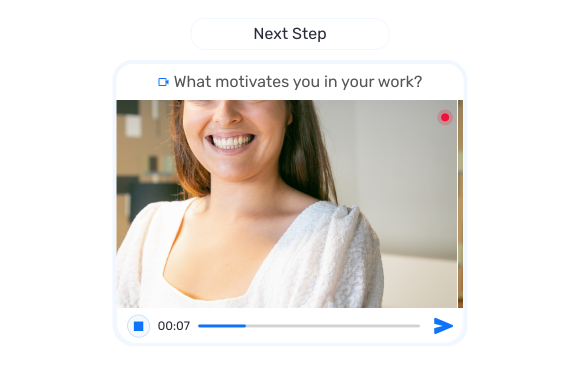
Interviewing every shortlisted candidate can quickly become a bottleneck. Structured interviews create a more consistent evaluation process by asking every candidate the same role-relevant questions, while AI and asynchronous interviews allow applicants to complete interviews at a time that suits them. Recruiters can then review responses when convenient, significantly increasing interview capacity without sacrificing consistency.
6. Validate Candidates with Assessments
Resumes and interviews only reveal part of a candidate's potential. Role-specific assessments provide objective evidence of technical skills, cognitive ability, behavioral traits, language proficiency, or job-specific competencies, helping recruiters make more informed decisions. When used alongside interviews and resume screening, pre-employment assessments create a more complete picture of each candidate while reducing reliance on human judgment.
7. Strengthen Your Existing ATS Rather Than Replace It
Many organizations already have an established applicant tracking system that manages applications and recruitment workflows effectively. Instead of replacing that infrastructure, modern recruitment platforms can often integrate with an existing ATS to enhance candidate screening, interviewing, matching, and assessment capabilities. This allows hiring teams to improve high-volume recruiting without disrupting established processes and having to learn an entirely new program.
8. Continuously Improve Using Recruitment Metrics
The best recruiting strategies for high-volume roles are continually refined using recruitment data. Monitor key metrics such as application completion rates, stage conversion, candidate drop-off, time to shortlist, and time to hire to identify bottlenecks and measure the effectiveness of your hiring process. Reviewing previous applicants and rediscovering qualified candidates within existing talent pools can also reduce sourcing efforts and speed up future hiring campaigns.
Hire-Match: A Good Example of High-Volume Recruiting Software
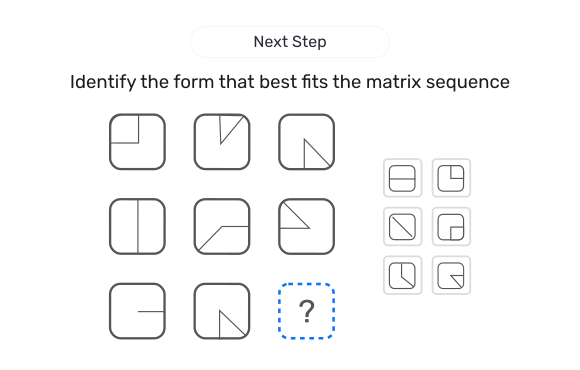
Hire-Match brings AI screening, interviews, assessments, and candidate ranking together in one connected hiring workflow, helping recruiters manage large applicant volumes more efficiently.

Hire-Match offers:
- AI resume screening software: Automatically analyzes resumes based on skills, experience, qualifications, and job fit to identify the strongest candidates beyond simple keyword matching.
- AI and asynchronous interview software: Conduct structured interviews at scale with consistent evaluation criteria, allowing recruiters to review responses whenever it suits their schedule.
- Candidate assessment software: Evaluate cognitive ability, technical skills, behavioral traits, language proficiency, and more using customizable assessments backed by decades of JobTestPrep expertise.
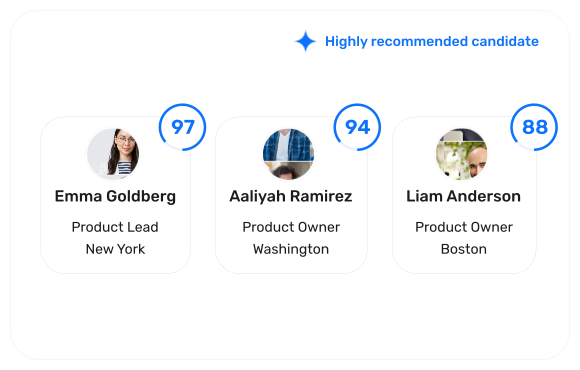
- Predictive candidate ranking: Combines resume screening, interviews, and assessments into a Predictive Success Model that surfaces the Top 5 candidates and provides transparent, explainable hiring insights.
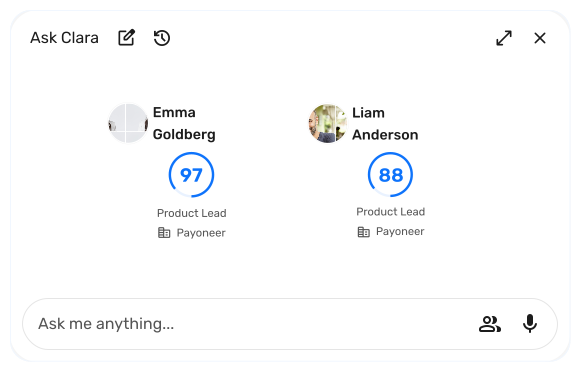
- Clara, an AI recruiting assistant: Compare candidates, explain scores, challenge recommendations, and uncover the reasoning behind every insight, giving recruiters transparent hiring intelligence rather than a black box decision-making.
- ATS integration: Works alongside leading applicant tracking systems or as a standalone platform, adding flexible AI screening without replacing your existing hiring infrastructure.
- Scalable pricing: Pricing is based on simultaneously active job openings rather than recruiter seats or applicant volume, making it easy to scale hiring as your business grows.
- Recruitment analytics: Monitor metrics such as time to hire and candidate drop-off from one dashboard, helping recruiters spot bottlenecks and understand where high-volume hiring processes can be improved.
FAQs
The best high-volume recruiting software depends on your organization's hiring goals, existing software, and the size of your hiring campaigns. If you're looking for an AI-powered platform that combines resume screening, candidate matching, structured interviews, customizable assessments, and ATS integration in one workflow, Hire-Match is a strong option. For a detailed comparison of the leading platforms, read our guide to the best high-volume recruiting software.
High-volume recruiting software automates and streamlines repetitive hiring tasks such as resume screening, candidate ranking, interview scheduling, assessments, and candidate communication. This helps recruiters process large applicant pools more efficiently while maintaining consistent evaluation standards and reducing time to hire.
Yes. Many modern high-volume recruiting platforms integrate with existing applicant tracking systems rather than replacing them. This allows organizations to add AI screening, interviews, candidate matching, and assessments while continuing to use their current ATS for recruitment management.
High-volume recruiting is commonly used in retail, hospitality, healthcare, manufacturing, customer service, and other industries that regularly hire large numbers of employees. It's also valuable for graduate recruitment, seasonal hiring, business expansion, and organizations with high employee turnover.
Maintaining hiring quality requires structured, evidence-based evaluation rather than relying solely on manual resume reviews which are susceptible to inconsistent human judgement. Using consistent screening criteria, structured interviews, role-relevant assessments, and AI-assisted candidate ranking helps recruiters make fairer, more informed hiring decisions while managing large applicant volumes.
All our recruitment solutions
Resume screening software
Turn a pile of resumes into a ranked shortlist, backed by clear hiring evidence.
Interview software
Screen candidates with structured video, audio, and conversational interviews.
AI recruiter
Ask Clara, your recruiting assistant, anything about any candidate in your hiring pipeline.
Candidate assessments
Validate cognitive ability, behavioural fit, and job-specific skills.