September 2026 / 10 min read / Written by our editorial team
Your strongest candidate could be hiding in plain sight simply because their resume doesn't use the expected keywords. Candidates don’t always use exact terminology, or they may have an unconventional job title with transferable skills that aren't immediately obvious on a resume. Fortunately, AI candidate matching goes beyond keyword matching, comparing candidates' experience with job requirements using natural language and context. This guide explains how AI improves candidate matching in recruiting, how it works, and what to look for in this intelligent hiring technology.
Key Takeaways
- AI candidate matching compares candidate evidence with job requirements to prioritize relevant talent.
- It can look beyond exact keywords to recognize related skills, natural language, transferable experience, alternative job titles, and career context.
- Candidate matching isn’t just for resumes; it can analyze other candidate evidence, including assessment results and interview reports.
- Match scores should support recruiter judgment, and scores themselves should not make the final hiring decision.
- Strong matching tools explain why a candidate matches and how a score is calculated.
What Is AI Candidate Matching?
AI candidate matching uses artificial intelligence to identify how well a person's background and capabilities fit a particular job. Rather than relying only on exact keywords, AI can analyze different types of career evidence and compare them with the criteria recruiters have set for the role.
Depending on the technology, this could include:
- Skills and how they have been applied in previous roles
- Career history, responsibilities, and level of experience
- Relevant qualifications, education, or professional certifications
- Experience within the same or related industries
- Transferable experience from different roles or career paths
- Practical requirements, such as location or working arrangements
- Essential, preferred, and role-specific hiring criteria
Candidate matching often includes a “match score”, which is a numerical rating based on the evidence from different screening processes to decide how closely a candidate matches the job requirements.
The purpose is to give recruiters a clearer picture of where each candidate aligns with the role and where potential gaps exist. AI can help prioritize who deserves closer attention, while recruiters keep control over who progresses and ultimately gets hired.
Candidate Matching vs. Screening vs. Resume Screening
AI candidate matching, AI candidate screening, and AI resume screening often happen alongside one another, so the terms can be easily confused. The simplest way to distinguish them is by looking at the question each process helps recruiters answer and at what stage they appear in the hiring funnel.
| Process | Question it answers | What it involves | Where it appears in hiring |
| Candidate matching | Based on the available evidence, how well does this person match this specific role? | Comparing candidate evidence against the requirements of a particular position. | During sourcing, talent rediscovery, resume review, assessments, interviews, and shortlisting. |
| Candidate screening | What evidence should we collect and consider to evaluate this candidate? | Using methods such as resume review, screening questions, assessments, and interviews to evaluate candidates. | Throughout the screening and selection process. |
| Resume screening | What relevant information can we learn from this applicant's resume? | Reviewing experience, skills, qualifications, employment history, and other resume evidence. | During the initial review of applications and resumes. |
The key difference is that candidate matching is a comparison rather than a single screening method. It asks how well the evidence currently available about a candidate aligns with the requirements of a particular job.
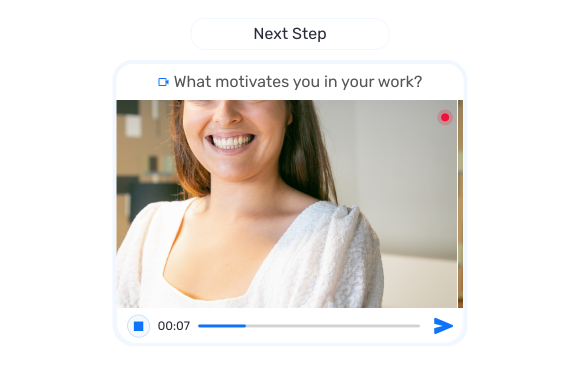
Matching can therefore happen within AI sourcing and throughout screening methods. A pre-employment assessment, for example, is a screening method, but its results can also provide new evidence for candidate matching. Likewise, an asynchronous interview uses AI to evaluate a candidate, while their answers can provide further evidence of how well they match the role.
As more evidence becomes available, the answer to “How well does this candidate match?” can change. We'll explore this dynamic matching process in more detail later in the guide.
How Does AI Candidate Matching Work?
For AI candidate matching to work, the system needs to understand both sides of the match: what the employer needs and what the candidate brings to the role. It can then compare the available evidence and help recruiters identify where the two align.
1. AI interprets the job requirements
First, the system needs to establish what recruiters are actually looking for. Depending on the software, it may analyze criteria such as:
- Essential and desirable skills
- Relevant experience and seniority
- Role responsibilities
- Qualifications or certifications
- Industry knowledge
- Location or working arrangements
- Other job-specific requirements
Some platforms can extract these requirements directly from the job description, while others allow recruiters to define or adjust the criteria used for matching.
However, AI can only work with the requirements it is given. If a job description has vague, inaccurate, or overly restrictive criteria, those problems will show up in the matching process.
2. It builds an understanding of the candidate
Next, the system analyzes the information available about each candidate. At the application stage, this will often begin with the resume. However, the candidate profile doesn't necessarily end there. Depending on the platform and stage of recruitment, other evidence could include:
| Recruitment stage | How candidate matching can be used |
| Sourcing | Identify potential candidates whose experience appears relevant to the vacancy |
| Talent rediscovery | Find previous applicants or existing talent database profiles that could suit a new role |
| Application review | Compare resume and application evidence with the job requirements |
| Conversational AI | Add information from screening questions or other early-stage checks |
| Assessments | Consider whether proven skills or abilities support the initial match |
| Interviews | Add job-relevant evidence gathered from structured candidate responses |
| Shortlisting | Review the accumulated evidence to help prioritize candidates for closer consideration |
This means the evidence available for matching can grow as the candidate moves through each stage of the hiring process.
3. AI compares the evidence with the role
The system can then compare candidate evidence against the requirements established for the position. Rather than only asking whether a particular term appears on a resume, AI matching can consider the context and relevance of the evidence it finds.
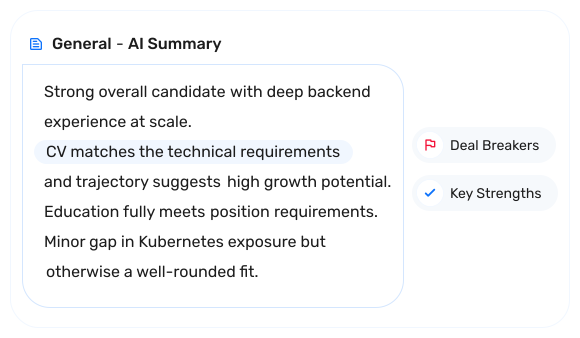
For example:
- Has the candidate proved an essential skill?
- How much relevant experience do they have?
- In what roles or situations did they gain that experience?
- Which essential and desirable criteria appear to be met?
- Where is relevant evidence missing?
- Could experience from another role or industry be transferable?
- How does the candidate's wider career history support their fit for the role?
This creates a more detailed picture of candidate-to-role alignment than simply counting matching words.
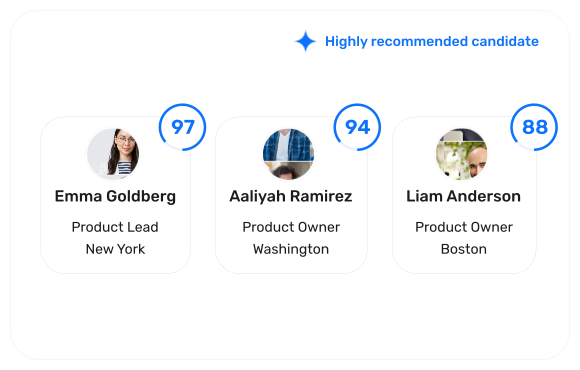
4. Recruiters receive the matching results
The platform turns its analysis into information recruiters can use to review and prioritize candidates.
- Depending on the software, results might include:
- Overall match scores or percentages
- Candidate rankings
- Skills and experience alignment
- Requirements met or missing
- Candidate strengths
- Potential gaps or concerns
- Explanations or evidence supporting the match
The format of AI candidate matching is important. A match percentage may provide a useful snapshot of candidate results, but it doesn't tell the recruiter much on its own.
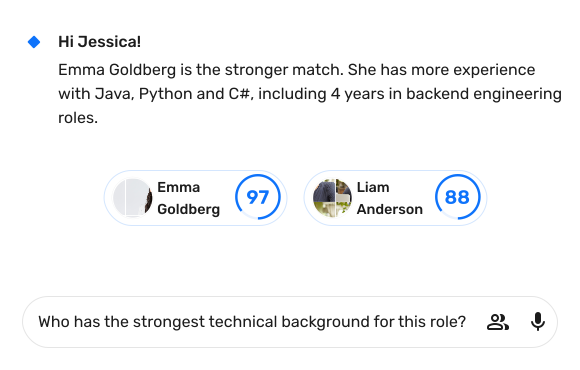
Strong platforms, like Hire-Match, explain why the candidate received that result so recruiters can examine the underlying evidence for themselves.
How AI Improves Candidate Matching in Recruiting
So, how does AI improve candidate matching in recruiting in practice? We’ll go through the key benefits below.
Find relevant candidates faster
Manually comparing every candidate against a vacancy becomes increasingly difficult as the talent pool grows. AI candidate matching can analyze available profiles and surface people whose experience appears most relevant.
This can be particularly useful for high-volume recruiting, large applicant pools, extensive talent databases, and sourcing campaigns where recruiters may otherwise have hundreds or thousands of profiles to consider.
Rediscover candidates already in your talent pool
The right candidate may already be sitting in your ATS or CRM. Some ATS integrations with matching technology can help recruiters revisit existing talent and identify people who could fit a new vacancy.
This might include previous applicants, candidates sourced for another position, or strong candidates who reached the final stages of an earlier hiring process.
Compare candidates more consistently
AI matching can compare candidates against the same defined role requirements, giving recruiters a more consistent starting point for evaluation.
This doesn't remove the need for recruiter judgment, nor does it guarantee a bias-free process. Instead, it can offer a structured way to assess available evidence before recruiters investigate promising candidates in greater depth.
Spend more time on the human side of hiring
Comparing resumes, profiles, and job requirements can consume time that recruiters could spend elsewhere. Using recruitment automation to handle some of this comparison can free up more time for candidate conversations, interviews, hiring manager collaboration, and candidate engagement.
AI candidate matching is most valuable when it supports recruiter judgment rather than replacing it: technology can help find and organize the evidence, while recruiters are still responsible for making hiring decisions.
Common Misconceptions About AI Candidate Matching
AI candidate matching can make it easier to identify relevant talent, but its results still need to be understood and used appropriately.
Here are 4 common myths about AI candidate matching to watch out for:
AI candidate matching makes the hiring decision
Candidate matching is designed to support hiring decisions, not make them on a recruiter's behalf. AI might find promising candidates, prioritize profiles, or highlight relevant evidence, but recruiters should remain responsible for deciding who progresses.
The highest match score is always the best candidate
A 95% match looks convincing, but the number doesn't tell you everything.
There is no universal formula for calculating a candidate match. One platform might produce a score prioritizing skills and experience while another may value education and industry alignment. Missing candidate information can also affect the result, while an essential requirement may matter considerably more than several desirable ones.
Manually reviewing recommendations and understanding the weighting of a match score can be just as valuable as the score itself.
AI candidate matching is automatically unbiased
Replacing some manual evaluation with AI doesn't automatically remove bias.
When evaluating candidate matching software, look for safeguards such as:
- Matching based on relevant job criteria
- Appropriate handling (or removal) of personal or demographic information
- Regular bias testing and auditing
- Explainable recommendations
- Human oversight
- The ability for recruiters to review and challenge results
AI candidate matching should offer a more structured way to evaluate job-related evidence, but even advanced technology like this can sometimes make mistakes. In fact, Amazon was found to use AI recruiting technology that created biased results against women. The software had been trained on historical resumes, most of which came from men, showing how patterns within training data can influence automated candidate evaluation.
Semantic search and AI candidate matching are the same thing
Semantic technology can help AI understand that two differently worded terms or phrases have a similar meaning. That's useful for finding candidates who don't use the exact terminology in a job description, but it's only one part of candidate matching.
More advanced matching can consider the context and depth of someone's experience, including previous responsibilities, career progression, transferable experience, and which job requirements they appear to meet or lack.
What Should Recruiters Look for in AI Candidate Matching Software?
Not all matching tools evaluate candidates in the same way. When comparing platforms, consider what evidence the AI uses, how it reaches its recommendations, and how much control recruiters retain.
Look for:
- Contextual matching: Can it recognize relevant and transferable experience without relying on exact keywords?
- Explainability: Can you see why a candidate was matched, ranked, or recommended?
- Requirement weighting: Can it distinguish between must-have and desirable criteria?
- Career evidence: Does it consider where and how candidates demonstrated relevant skills, rather than simply identifying that they have them?
- Dynamic matching: Can new evidence from screening, assessments, and interviews contribute to the match?
- Talent rediscovery: Can it match previous applicants and existing ATS profiles with new vacancies?
- ATS integration: Will it work alongside your existing recruitment stack and keep candidate data connected?
- Bias safeguards: What measures are in place to identify and reduce inappropriate influences on matching?
- Human oversight: Can recruiters review, question, and override AI recommendations?
- Data quality: How does the software account for missing, incomplete, or outdated candidate information?
Exactly what matters most will depend on how recruiters use AI for candidate matching. For example, sourcing teams may prioritize talent rediscovery, while recruiters using matching throughout the hiring process may benefit more from dynamic evidence and explainable recommendations.
How Hire-Match Takes Candidate Matching Further
Hire-Match goes beyond basic semantic matching by considering the candidate's broader career story, including progression, responsibilities, achievements, transferable experience, and evidence of how skills have been demonstrated.
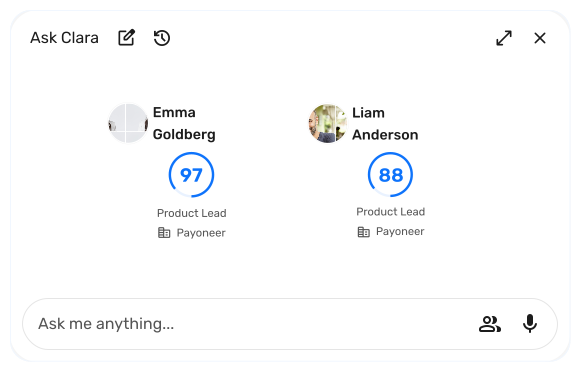
As candidates are screened, assessed, and interviewed, new evidence can contribute to their overall match. Clara then brings these insights together into an explainable shortlist, highlighting strengths, potential concerns, career trajectory, and the evidence behind each recommendation.
FAQs
AI candidate matching uses artificial intelligence to compare job-related candidate evidence with the requirements of a specific role. It can consider factors such as skills, experience, qualifications, responsibilities, and career history to help recruiters identify and prioritize relevant candidates.
Recruiters can use AI candidate matching across multiple hiring stages, including sourcing, talent rediscovery, application review, screening, assessments, interviews, and shortlisting. As more evidence becomes available, some systems can update the candidate's match to provide a more complete picture of their suitability.
AI resume screening focuses on analyzing information contained within a candidate's resume, such as skills, experience, and qualifications. Candidate matching compares relevant candidate evidence against the requirements of a particular job. The two often overlap, as resume evidence can be used to figure out an initial candidate-to-role match.
AI sourcing focuses on finding potential candidates, while candidate matching evaluates how closely a person aligns with a particular opportunity. The two can work together: matching technology can help recruiters search large talent pools and prioritize the profiles that appear most relevant to a vacancy.
Yes. Depending on the software, candidate matching can integrate with an ATS through a native integration, API, or an additional platform that works alongside the existing system. This can also enable talent rediscovery by matching candidates already stored in the ATS with new vacancies.
Resume parsing extracts information from a resume and converts it into structured data, such as skills, job titles, employment history, and qualifications. Candidate matching uses relevant information to assess alignment with a specific job. Resume parsing can therefore provide some of the data used during the matching process.
All our recruitment solutions
Resume screening software
Turn a pile of resumes into a ranked shortlist, backed by clear hiring evidence.
Interview software
Screen candidates with structured video, audio, and conversational interviews.
AI recruiter
Ask Clara, your recruiting assistant, anything about any candidate in your hiring pipeline.
Candidate assessments
Validate cognitive ability, behavioural fit, and job-specific skills.